Showing posts with label Other Favorites. Show all posts

Saturday, June 29, 2024

For This Summer -- The Play’s the Thing!

We have a dramatic reading challenge to offer our bookish friends this summer. And I mean dramatic in its literal sense. For among the novels, histories, theological studies, cultural commentaries, and “pure pleasure reads” that Claire and I tackle, we also enjoy reading plays. And we have included in our reading regimen for the next 2-3 months several of our favorite plays. 

We are inviting friends to go “on stage” with us in this theatrical adventure by selecting 1 or 2 (or more) of the plays in this list to read along with us. Now you know that Claire and I are quite positive about these kinds of reading partnerships because they provide motivation, accountability, and the added bonus of possibly exchanging opinions with like-minded friends. So, for those of you who do choose to read a play or two or more, please use the e-mail or phone to let us know your reactions to the plays. For locals, we could even arrange to get together over coffee. 

And, by the way, as a special incentive, we are offering a sweet reward for everyone who is successful in reading six or more of the plays from our list; namely, Bakers Candies or Claire’s chocolate chip cookies! You can’t beat that kind of deal.

Here are the plays we will be reading:

Our Town by Thornton Wilder

 A Man for All Seasons by Robert Bolt

Doctor Faustus by Christopher Marlowe

Sentenced to Life by Malcolm Muggeridge

You Can’t Take It with You by George S. Kaufman and Moss Hart.

Abortion by Eugene O’Neill

The Doctor and the Devils (a screenplay) by Dylan Thomas. 

In addition to these, we will also be reading 3 of Shakespeare’s history plays (Antony & Cleopatra, Henry V, and Julius Caesar) and 3 plays by James Barrie (Peter Pan, Quality Street, and The Admirable Crichton.)

Wednesday, January 03, 2024

The Reading Year in Review

It was an excellent year “between the covers.” Book covers, that is. My total number of books ended up at 71 with several sizable challenges among them. 

The highlights (almost all of them being re-reads) included the whole of the Sherlock Holmes canon; 3 Dickens novels and a couple of Sabatini’s; The Lord of the Rings trilogy (plus The Hobbit, of course); Lewis’ space trilogy and his Chronicles of Narnia; The Rise and Fall of the Third Reich; Ben-Hur; Cripple Creek Days; Seabiscuit; The Politically Incorrect Guide to Western Civilization; a couple of Paul Tournier’s works; Malcolm Muggeridge’s Confessions of a Twentieth Century Pilgrim; 4 of Shakespeare’s history plays; Fahrenheit 451; Killer Angels; Cal Thomas’ Watchman in the Night; 10 Books That Screwed Up the World: And 5 Others That Didn't Help; and the massive collection rightfully entitled, The Ultimate Christmas Collection.

And among the books specifically planned for the first quarter or so of this year? We Will Not Be Silenced by Erwin Lutzer; David Copperfield by Charles Dickens; No Little People: Sixteen Sermons for the 20th Century by Francis Schaeffer; Witness by Whittaker Chambers; What’s So Great about Christianity by Dinesh D’Souza; 20,000 Leagues Under the Sea by Jules Verne; Jesus Is Risen: Paul and the Early Church by David Limbaugh; Heaven by Randy Alcorn; And in the End: The Last Days of The Beatles by Ken McNab; and Cold-Case Christianity: A Homicide Detective Investigates the Claims of the Gospels by J. Warner Wallace. 

Want to join me for any of these?

Postscript: The full reading list for 2023 is below with the highest recommendations shown by 4 asterisks. 

January
*** 1) A Study in Scarlet (Arthur Conan Doyle)
*** 2) The Sign of Four (Arthur Conan Doyle)
**** 3) The Adventures of Sherlock Holmes (Arthur Conan Doyle)
**** 4) The Memoirs of Sherlock Holmes (Arthur Conan Doyle)
**** 5) The Return of Sherlock Holmes (Arthur Conan Doyle)
**** 6) The Hound of the Baskervilles (Arthur Conan Doyle)
** 7) The Valley of Fear (Arthur Conan Doyle)
**** 8) His Last Bow (Arthur Conan Doyle)
*** 9) The Case Book of Sherlock Holmes (Arthur Conan Doyle)
*** 10) The Master of Ballantrae (Robert Louis Stevenson)
*** 11) R.U.R. (Karel Capek)
February
**** 12) Scaramouche (Rafael Sabatini)
**** 13) Henry VI Part One (William Shakespeare)
**** 14) Henry VI Part Two (William Shakespeare)
**** 15) Henry VI Part Three (William Shakespeare)
**** 16) Richard III (William Shakespeare)
March
**** 17) The Politically Incorrect Guide to Western Civilization (Anthony Esolen)
*** 18) The Legend of Sleepy Hollow (Washington Irving)
April
**** 19) Confessions of a Twentieth Century Pilgrim (Malcolm Muggeridge)
**** 20) The Old Curiosity Shop (Charles Dickens)
**** 21) The Hobbit (J.R.R. Tolkien)
**** 22) The Fellowship of the Ring (J.R.R. Tolkien)
**** 23) The Two Towers (J.R.R. Tolkien)
May
**** 24) The Return of the Ring (J.R.R. Tolkien)
**** 25) Holy Disorders (Edmund Crispin)
June
*** 26) Swan Song (Edmund Crispin)
*** 27) Out of the Silent Planet (C.S. Lewis)
*** 28) Perelandra (C.S. Lewis)
**** 29) That Hideous Strength (C.S. Lewis)
July
**** 30) The Seasons of Life (Paul Tournier)
**** 31) Fahrenheit 451 (Ray Bradbury)
**** 32) Submarine (Edward L. Beach)
**** 33) The Rise and Fall of the Third Reich (William Shirer)
August
*** 34) The Strong & the Weak (Paul Tournier)
*** 35) Gettysburg: The Confederate High Tide (Champ Clark)
**** 36) Killer Angels (Michael Shaara)
**** 37) The Stars in Their Courses (Shelby Foote)
*** 38) Watchman in the Night (Cal Thomas)
**** 39) The Snare (Rafael Sabatini)
**** 40) The Magician's Nephew (C.S. Lewis)
September & October
**** 41) The Lion, the Witch, and the Wardrobe (C.S. Lewis)
*** 42) Fire Over England (A.E.W. Mason)
**** 43) Shaken (Tim Tebow)
**** 44) Ben-Hur (General Lew Wallace)
** 45) The White Company (Arthur Conan Doyle)
**** 46) 10 Books That Screwed Up the World: And 5 Others That Didn't Help (Benjamin Wiker)
**** 47) The Horse and His Boy (C.S. Lewis)
**** 48) Prince Caspian: The Return to Narnia (C.S. Lewis)
**** 49) Nicholas Nickelby (Charles Dickens)
*** 50) The Johnstown Flood (David McCullough)
*** 51) The Voyage of the Dawn Treader (C.S. Lewis)
*** 52) The Shepherd of the Hills (Harold Bell Wright)
November
**** 53) Bleak House (Charles Dickens)
**** 54) Seabiscuit (Lauren Hillenbrand) 
** 55) The Wolves of Willoughby Chase (Joan Aiken)
** 56) The Beast In Me and Other Animals (James Thurber)
57) Cripple Creek Days (Mabel Barbee Lee) 
December
From The Ultimate Christmas Collection:
**** 58) Christmas story collection (Louisa May Alcott) 
*** 59) Christmas story collection (Henry van Dyke, Ellis Parker Butler, O Henry, et al)
** 60) The Nutcracker and the Mouse King (ETA Hoffmann)
*** 61) Christmas story collection (Self Lagerlof, Washington Irving,William Dean Howells, et al)
** 62) The Nutcracker & the Mouse King (E.T.A. Hoffman)
**** 63) Christmas story collection (Lucy Maud Montgomery)
*** 64) Christmas story collection (Damon Runyan, Frank Stockton, Harriet Beecher Stowe, et al)
**** 65) Christmas at Thompson Hall & Other Stories (Anthony Trollope)
*** 66) Beasley's Christmas Party (Booth Tarkington)
**** 67) The Birds' Christmas Carol & Other Stories (Kate Douglas Wiggin)
**** 68) The Silver Chair (C.S. Lewis)
**** 69) The Last Battle (C.S. Lewis)
* 70) Letter to the American Church (Eric Metaxas)
** 71) The Golden Ring (John Snyder)

Saturday, August 19, 2023

A Reading Wrap-Up...and an Invitation

As summer nears its end, I find my year’s reading list down from my average number. But then, when I look over the list and realize how many of the books read thus far in 2023 have been particularly hefty -- over 600 pages in Charles Dickens’ The Old Curiosity Shop, the entire canon of Sherlock Holmes which goes over 600 pages, the nearly 1300 pages of The Rise and Fall of the Third Reich, and the over 1500 pages of the JRR Tolkien saga -- I may be actually higher than my normal page count. So that’s an encouragement -- as is keeping a list in the first place. And, let’s face it, maintaining a successful “reading life” needs every bit of encouragement, accountability, good recommendations, and whatever other motivations we can get.

My most recent reading has all been of exceptional quality. I finally got through (for the third or fourth time in my life) William Shirer’s epic The Rise and the Fall of the Third Reich. Then there was Paul Tournier’s The Strong and the Weak. Tournier is a Swiss psychiatrist who wrote in the 1940s into the 1970s with insights and wise counsel derived from his Christian worldview. He is one of the “old friends” in my library as I’ve been reading his books since my very early days as a Christian. This particular book was a challenging study of how a Christian properly responds to his natural personality and tendencies. (By the way, I shared a few stimulating quotes from that book a few days ago in this post.)

Next up? After watching a couple of extremely interesting interviews with novelist and Civil War historian Shelby Foote, I was prompted to spend a little time in the War Between the States -- more specifically, in the 3-day Battle of Gettysburg which was the beginning of the end for the Confederacy. That trip started with Gettysburg: The Confederate High Tide by Champ Clark; then I went on to Michael Shaara’s highly-acclaimed novel, Killer Angels (my 3rd or 4th time through); and finally, I took up Shelby Foote’s Stars in Their Courses, his very detailed history of the battle’s prelude, action, and aftermath.

But now it’s time to move on. First, I’ll be finishing Cal Thomas’ Watchman in the Night and Raphael Sabatini's novel set in Portugal during the Napoleonic wars, The Snare. But what of my reading plans for late summer and fall? Well, they include David Limbaugh’s Jesus Is Risen: Paul and the Early Church; Tim Tebow’s Shaken (which is the book to be discussed at the next Vital Signs Book Brunch at our place on Saturday, September 23 at 10:30); and re-readings of Randy Alcorn’s Heaven, Lauren Hillenbrand’s Seabiscuit, General Lew Wallace’s Ben-Hur, and the C.S. Lewis series, The Chronicles of Narnia. 

Want to join me with any of these terrific books? Just let me know.

Sunday, August 13, 2023

Cal Thomas' A Watchman in the Night (Thus Far In My Reading)

I am very much enjoying reading Cal Thomas’ new book, A Watchman in the Night: What  I’ve Seen Over 50 Years Reporting on America. In this illuminating book, Mr. Thomas reviews (year by year since 1984) key happenings in the culture -- happenings that not only made headlines in their time, but which, in several important ways, have shaped the world into what it is today. Along the way, Thomas shares a few of the insightful comments on those happenings that come from his contemporary newspaper columns…and a lot more that come from his present evaluations. 

Cal Thomas has always been an exceptional writer and a principled, engaging, and consistently Christian man. But this book (it’s not the only one I’ve read of his) is remarkably wise and helpful to those who desire to efficiently engage the culture for good…while yet embracing the limitations of politics or any other merely human effort.

Let me give you just 4 examples from my reading so far. And, rest assured, if you could look at the many starred and underlined pages in my copy, you’d know I could give you a lot more.

From his review of the year 1987: “I interviewed Secretary of Education William Bennett who told me he believed it would take another ten years to undo the damage caused to public school students because of political meddling and social experimentation that resulted in declining test scores and underqualified teachers. Unfortunately, things have only gotten worse with even more social experimentation (now known as critical race theory and wokeness). I will repeat myself: we should stop giving them the ‘raw material’ to create new generations of secular progressives and start sending them to private schools (I favor vouchers which are now allowed in several states) and to universities that do not undermine our history, traditions, values, and faith.” (Page 29)

From his review of the year 1992: “Lyndon Johnson used to say his grandfather died at the Alamo. He later told author Doris Kearns Goodwin that his grandfather really died at the battle of San Jacinto during the fight for Texas independence from Mexico, but he called it the Alamo because more people had heard of it. The truth was that Johnson’s grandfather died in neither battle. He died in bed. Shades to come with a similar habit of lies told by Joe Biden.” (Page 70)

From his review of the year 2002: “General Electric released a TV ad touting its new 4D Ultrasound machine that showed a baby developing inside its mother. Over the song ‘The First Time Ever I Saw Your Face,’ an announcer said, ‘When you see your baby for the first time on the new GE 4D Ultrasound, it really is a miracle.’ GE may not have intended its new device to act as a powerful pro-life statement, but that’s what it became. Surveys showed that when abortion-minded women see an image of their child, they mostly choose to give birth. It is why the pro-death cult wants to exterminate them before they start looking ‘human.’” (Page 152)

From his review of the year 2003: “To Democrats, government is the only entity that can make your life better. The successful must be punished, because if initiative, hard work, and taking care of yourself catch on, people might wake up to the lies they’ve been told by the Democrat party and start taking care of themselves.” (Page 156)

Tuesday, August 08, 2023

Upon Reading Tournier’s The Strong and the Weak

One of the first Christian authors I was introduced after finding myself in Omaha, Nebraska (that was just a few weeks after my conversion to the Faith) was the Swiss physician, pastoral psychologist, and popular writer, Paul Tournier. I quickly bought up paperback copies of his small books and I’ve been re-reading them ever since those long, distant days. 

The other day I picked out The Strong and the Weak (1948). Perhaps because I was reading it in between sessions with Cal Thomas’ Watchman in the Night, the Book of Hebrews, and Rafael Sabatini’s novel The Snare, I found Tournier tough going for awhile. But I stayed doggedly with it and, by the time I had started the last third of the book, I was really pleased that I had done so. Not because it had ever become easier reading, but because the Lord was underscoring several of the points Tournier made in the book and letting me clearly know that I had a lot to learn, think about, and apply. 

But because very few of you will take my recommendation so passionately that you’re going to go order the book for immediate reading (!), let me pass along a few of my favorite quotes from Paul Tournier’s The Strong and the Weak.

Speaking of the “great illusion…that there are two kinds of human beings, the strong and the weak. The truth is that human beings are much more alike than they think. What is different is the eternal mask, sparkling or disagreeable, their outward reaction, strong or weak.” (Pages 20,21)

“All men are afraid of God. Open the Bible and you will see that this is their first reaction whenever God speaks to them. They are afraid of God because they have a bad conscience and because they dread the sacrifices which He may ask of them.” (Page 93)

“The reason why so many conversations remain shallow is that the speakers are all running away from one another…They hide their vulnerable selves behind a screen of banal remarks, polite compliments, witticisms, or artificial extravagances. An absolutely honest and direct intercourse, free from subterfuge, pretense, evasion and swank is difficult to maintain. As soon as it becomes dangerous, we wrap ourselves up like warships in a smoke-screen.” (Pages 97, 98)

“One can never foresee the means that God will use to touch a man’s heart, the roads along which He will drive him, nor the moment at which He will intervene in his life. It may be at the height of happiness, or in the midst of a painful crisis. It may be my means of a slow process of evolution, or quite suddenly and unexpectedly. But it is always through the free intervention of the Spirit.” (Page 143)

“For the respect for the human person, the protection of the weak, charity, and the necessity of salvation by God, professed by Christianity, our age has substituted the cult of the State, the veneration of force, the crushing of the weak in the struggle for life, and confidence in the greatness of man, ceaselessly climbing the ladder of progress and power.” (Page 161)

“A man’s true value consists in his likeness to God. What gives value to his thoughts, his feelings and his actions, is the extent to which they are inspired by God, the extent to which they expressed the thought, the will, and the acts of God.” (Page 163)

“We are all equal in sin and in moral wretchedness. It is conventionalism which judges men by their social facade, whereas the gospel looks into the heart…The further we advance in the Christian life, the more we become aware of our sin. It is as if weights were continually being added to one of the pans of a balance; and each time this happens we need more of God’s grace in the other pan in order to reestablish the equilibrium.” (Page 175)

“Faith is a strength, a concrete and practical strength. The Christian life is not abstention. Genuine conversion, far from paralyzing the person, makes it dynamic.” (Page 202)

 “I do not wish to be misunderstood. I am not criticizing the strong. It is right that they should use in His service the natural gifts entrusted to them by God. But the authentic mark of the Spirit is just this sincerity by which the strong may recognize how much of their action is only too human, and admit that they are not as strong as they are reckoned to be by the mass of their followers who have set them up as leaders. The greatest witness the weak can bear is in the victories they can win over their own natures and the strength of the Spirit. The contrary is the case with the strong. The strong man witnesses best not by showing off his strength or his power to dominate others with his mind or his words, but in his victory over himself in becoming humble, tolerant, and gentle. This is the more difficult because he has a part to play that is more in the public eye, and because it is no longer a question of influencing others (which he finds easy) but of mastering himself...The fact is that true faith is as difficult for the strong as for the weak.” (Page 216)

“That day I realized all at once that when my services were called upon in the church, it was much more because of my natural than my supernatural gifts. That evening I was with some friends and told them what God had shown me, and I knelt down with them to pray that thenceforward He would build my service to Him more on what came from Him, and less on what came from me. Let us therefore be careful not to confuse natural strength with that of the Spirit.” (Page 218)

“Faith does help us to accept our nature, to carry its burdens like a cross, to offer it to God to be used in His service, to derive some good from it and not merely suffering.” (Page 241)

“If our lives are directed by the Spirit, we may count upon real particular victories over our natures, but we can never expect a total, final victory. It is quite as wrong to deny the partial victories as to exaggerate their importance. Our nature may be transformed in part; but there remains a part of it that we must simply accept as it is. To prefer the fairy-story is in fact to rebel against our human condition, to refuse to carry our cross, to seek to know in this life the complete liberation which will be ours only in the life hereafter.” (Page 246)

“As we travel this road, we find that grace constantly increases...Grace is infinitely bigger than we imagine. All has already been accomplished in Jesus Christ. In proportion as we recognize the evil in our own hearts, we appreciate more fully what he has done for us. In proportion, as we become aware of our wretchedness, we see that He has already answered it in advance by His sacrifice.” (Page 249)

“He is alive. If we open our hearts to Him, He fills them with His presence. Insofar as He thus lives in us, we are delivered from our weak reactions, while at the same time becoming more aware than ever of our weakness. We are delivered also from our strong reactions, while at the same time receiving from Him a strength that is beyond compare.” (Page 251)

Thursday, July 20, 2023

Revisiting Tournier's Seasons of Life

I have been reading (and, more importantly, re-reading) Paul Tournier since the year of my conversion to Christianity over 53 years ago. And my favorite of all of his brief books? Well, that would be whatever is the one I've just been spending time with again. In this case, that's The Seasons of Life.

“The Bible is the proclamation of God’s love, a love without limit and without condition. It is more than a proclamation; it is a proof. For, as John states it, the supreme testimony of His love is in having sent His only Son, in having assumed in Him all our humanity, in all its suffering and isolation, even unto death.”

“The self-denial required by the gospel is not at all a withdrawal into a truncated life of perpetual childhood. Self-denial is the renunciation of a self-directed life, for the very purpose of attaining a far greater fullness under the direction of God…In every passage wherein Jesus speaks of self-denial there was a promise which follows, a promise of riches ‘an hundred-fold.’ Even when He calls us to ‘lose’ our life, He adds that it is in order to save it. It is in order that we may find the real life, the life which is far more fruitful. 

Therefore we are faced with the question of life’s fulfillment. It is the law of the greater fulfillment which Christ has given us. Life with God is the greatest adventure imaginable.”

Friday, March 17, 2023

Catching Up: A Brief Review of First Quarter Reading.

Yes, the first quarter of 2023 is drawing to a close and I realize I’m behind schedule in reviewing and recommending books from my recent reading. So let me make it short and sweet. First of all, my reading is lagging behind a bit because of other things crowding into the schedule -- preparation for several sermons, preparation for a couple of lectures at a L’Abri Conference, trips to Kansas and Minnesota, and a busier schedule of “When Swing Was King” and other Vital Signs happenings. Still, I’ve very much enjoyed those titles I did get to.

As you may know, a great deal of my reading has always been re-reading. And that trend actually increases as I age. Even as I have favorite foods (hamburgers and grilled peppers, bacon and eggs) that I eat over and again; even as I have favorite haunts (the Colorado mountains, Branson) that I visit over and again; and even as I have favorite friends that I make it a habit to hang out with; so I am delighted to re-visit my favorite books.  

I’m in good company with this practice.

C.S. Lewis wrote in On Stories: And Other Essays on Literature, “An unliterary man may be defined as one who reads books once only…We do not enjoy a story fully at the first reading. Not till the curiosity, the sheer narrative lust, has been given its sop and laid asleep, are we at leisure to savour the real beauties. Till then, it is like wasting great wine on a ravenous natural thirst which merely wants cold wetness.”

And in An Experiment in Criticism, Lewis explained his convictions this way, “The majority never read anything twice. The sure mark of an unliterary man is that he considers ‘I’ve read it already’ to be a conclusive argument against reading a work…Those who read great works, on the other hand, will read the same work ten, twenty or thirty times during the course of their life.”

Therefore, with such standout encouragement, I’m not bothered to say that of the 17 books that I’ve read so far in 2023, 16 of them were re-reads. They included the full “canon” of Arthur Conan Doyle’s Sherlock Holmes (the 4 novels and the 5 collections of short stories): A Study in Scarlet, The Sign of Four, The Adventures of Sherlock Holmes, The Memoirs of Sherlock Holmes, The Return of Sherlock Holmes, The Hound of the Baskervilles, The Valley of Fear, His Last Bow, and the The Case Book of Sherlock Holmes.

There were also a couple of terrific adventure novels in that re-read pile (Robert Louis Stevenson’s The Master of Ballantrae and Rafael Sabatini’s Scaramouche); Karel Capek’s insightful play from 1920, R.U.R.; and 4 of Shakespeare’s “history” plays (Henry VI Part One, Henry VI Part Two, Henry VI Part Three, Richard III.)

And the only new work? Well, it was an exceptional one, The Politically Incorrect Guide to Western Civilization by Anthony Esolen. You’ll probably find me posting quotes from Esolen’s book on my Facebook page for some time. Plus, it made me eager to read other books he’s written. He’s relevant, accurate, insightful, wise, spiritually tuned in, and a wonderful writer. 

I recommend the Esolen book as highly as I can. And, yes, all of the others rate several stars as well. 


Tuesday, February 21, 2023

The Next VSM Book Brunch Is "Politically Incorrect"

"Political correctness, at its heart, is the effort to dissolve the foundations on which the American and European culture has been built.  It has been a demolition project: undermine Western civilization in whatever way possible...For those of us who love the West, it's a daunting battle."

This is from the preface of The Politically Incorrect Guide to Western Civilization, an enlightening, inspiring, and even fun book by Providence College English Professor, Anthony Esolen. I've just finished the first chapter ("Ancient Greece: Love of Wisdom & Beauty") and I'm finding it really terrific reading. I'm delighted we chose it as the book for the next Vital Signs Ministries Book Brunch on Saturday, March 25 from 10-12.  

So, if you haven't signed up, do soon ASAP. Then put the date on your calendar, get a copy of this extremely interesting (and remarkably easy-to-read) book, and get going!

Saturday, December 31, 2022

Ending 2022’s Reading: A Review, Recommendations, and Resolutions

The year 2022 was not a record year for my reading – there was too much time taken up with vertigo recovery, our care for Carol Coppi, our involvement with my little sister in Wichita, and the ever-busy tasks of Vital Signs Ministries. And, alas, my reading took a pretty big hit with the ending of the Notting Hill Napoleons, our remarkably stimulating book club of 30 years. However, I still managed to slip in 6 dozen. 

As usual, many of these books were re-reads as I thoroughly enjoyed checking in again with such dear, lifelong friends as Alexander Dumas, Rafael Sabatini, Samuel Eliot Morison, C.S. Lewis, Robert Louis Stevenson, Jan Karon, G.K. Chesterton, John Buchan, William Shakespeare, Michael Ende, Edna Ferber, Owen Wister, Joni Eareckson Tada, Bess Streeter Aldrich, and Charles Dickens. 

But I made some new friends in 2022 too. Hunting the Nazi Bomb by Damien Lewis, Your Time Is Now by Jonathan Evans, Seven Men of Gascony by R.F. Delderfield, The Admirals by Walter Borneman, Created Equal (Clarence Thomas in His Own Words) edited by Pack and Paoletta, Johnny Tremain by Esther Forbes, The Apostate by Mark Christian, and The Book of Signs by David Jeremiah. All of the above titles made 4 stars in my ratings and are therefore enthusiastically recommended to you all. 

So there you have a very brief review plus a few recommendations. How about the resolutions then? Well, even now I have begun re-reading the several books connected to a seminar I’m presenting at the Rochester L’Abri’s annual conference on February 17 & 18. That presentation is entitled Beware the Mad Scientist: Divine Warnings Against “Playing God” from Classic Literature and it will cover Frankenstein by Mary Shelley, The Island of Dr. Moreau and The Invisible Man by H.G. Wells, 20,000 Leagues Under the Sea by Jules Verne, Dr. Jekyll and Mr. Hyde by Robert Louis Stevenson, and Dr. Faustus by Christopher Marlowe.  

Beyond that project, my reading will most likely continue along regular routes. I will spend most of my reading time with those authors near and dear to me while occasionally investigating others.  Of course, I do have a few specific projects in mind (besides the L’Abri responsibilities) for 2023. They include my bi-annual reading of Heaven by Randy Alcorn; a few classic commentaries on books of the Bible by men like Harry Ironside; more Dickens and Shakespeare; a first time read of Robert Bork’s book The Tempting of America and George Gilder’s Men and Marriage; and jumping back into the stirring adventures of Sherlock Holmes, The Lord of the Rings, and The Chronicles of Narnia. 

Want to come along?

Thursday, June 16, 2022

A Remarkable New (Yet Very Old) Christian Adventure

 If you loved Pilgrim’s Progress, now you need to read what inspired it. Labyrinth of the World was written 55 years prior to Pilgrim’s Progress yet it remains virtually unknown to English readers. Now, thanks to Timothy Price, this work has been made more available in a beautiful new edition.


Monday, April 11, 2022

The First Quarter Scores

It has been a good year for reading thus far but, of course, every year is if one selects the right books to read.  I tend to guarantee high scores on that front by doing a lot of re-reads.  Indeed, spending time with old friends (including books) is always an enjoyable, profitable experience.  But this quarter is a little different with re-reads constituting less than 1/4 of the list. Still, I’ve been very fortunate in my choices and 13 of the 23 books read I’ve been able to rate 3 or 4 stars. So, like I said, it’s been a good year for reading thus far.

Recommendations from this group?  Well, the 3 start ratings include the 100 year old (but still remarkably relevant Eugenics and Other Evils by G.K. Chesterton; a WWII novel about British submarines, Gone to Sea in a Bucket by David Black; suggestions on fresh approaches to evangelism, Soul Whisperer by Gary Comer; a brief but valuable book by a British theologian long living in heaven, The Cross by J.C. Ryle; and two Rafael Sabatini novels featuring his buccaneer hero Peter Blood, Captain Blood Returns and The Fortunes of Captain Blood.  All fine.

And the 4 stars? 

* Hunting the Nazi Bomb by Damien Lewis. An enlightening, inspiring book about the desperate efforts made to stop Hitler from making an A bomb.

* Your Time is Now by Jonathan Evans.  An excellent book on the necessity of both grace and grit in the sanctified life.

* To Be Where You Are by Jan Karon.  The final in the highly esteemed Fr. Tim/Mitford series.  These are wonderful books which stimulate a life of faith, humility, gratitude, and joyful faithfulness to serve Christ in the “little things.”

* The Three Musketeers by Alexander Dumas.  This is one of those “old friends” I mentioned earlier.  A terrific read.

* Captain Blood by Rafael Sabatini.  Finely written, exciting, cleverly planned plots – Sabatini is a treasure and this is one of his best.

* The Stalking Horse by Rafael Sabatini.  Another fine novel of adventure, redress of injustice, and a bit of romance.

* The Railway Children by Edith Nesbit.  Read on my Kindle during a long plane ride, this proved a real find.  It is a charming story for children…and for grownups who are wise enough to know there’s a lot to appreciate and learn in the best so-called “children’s literature.”

Next up (that I know of now) are a re-read of Joni Eareckson Tada’s Heaven: Your Real Home; Apostate by Dr. Mark Christian; Showboat by Edna Ferber; and re-reads of Michael Ende’s Neverending Story and C.S. Lewis’ The Problem of Pain.


Monday, July 26, 2021

There's Always a Little Time for Books

My last reading review posted here on The Book Den was the first week of May and a lot of things have competed for those hours usually devoted to reading: Vital Signs Ministries responsibilities (including several preaching assignments), an awful lot of lawn work, days spent without electricity after Omaha's horrid wind/rainstorm, a mountain hiking trip to Colorado, and some household projects.

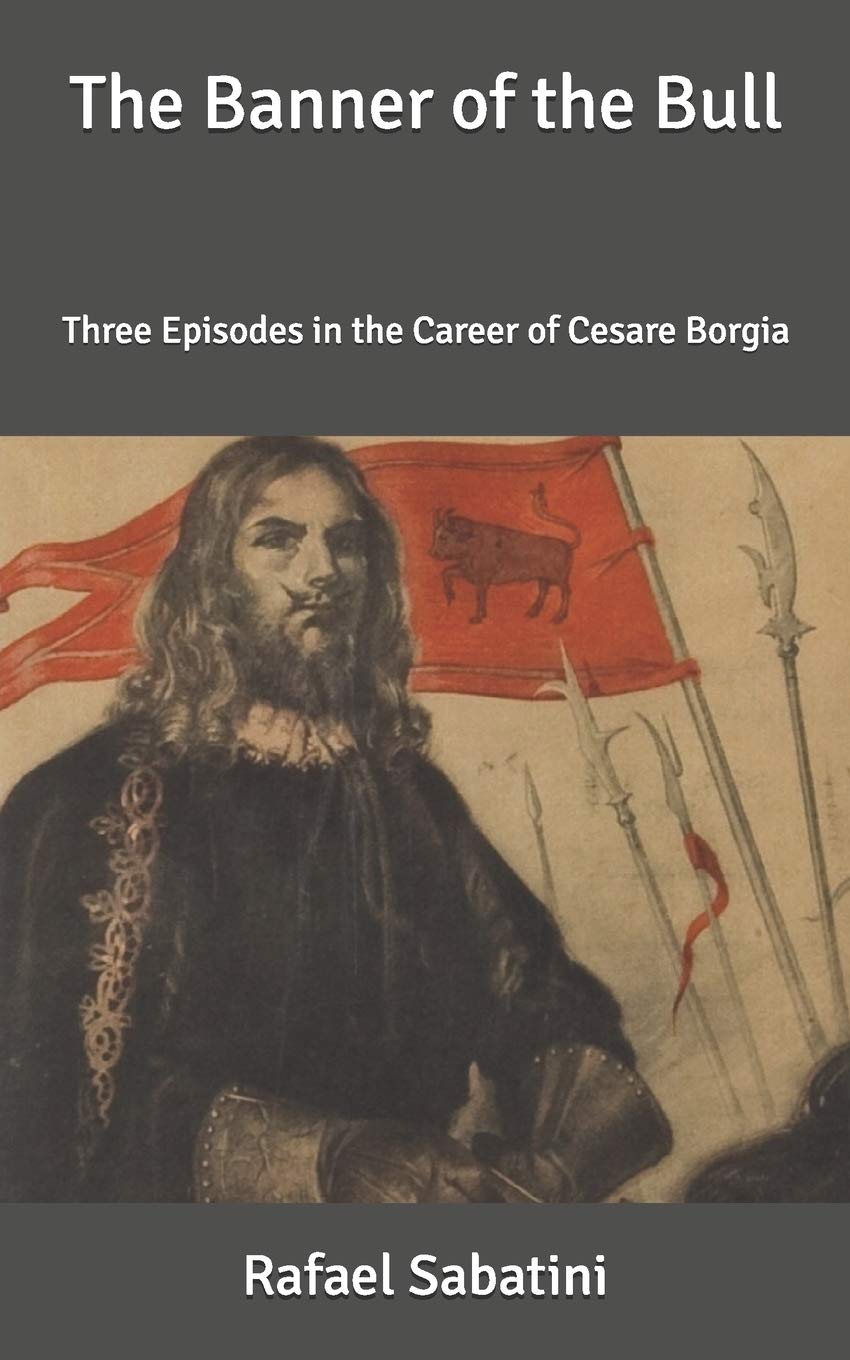
Still, I found enough time to work my way through proofreading the first two manuscript volumes of The Faithfulness of God, missionary LaVern Smith's detailed autobiography. Really rich and inspiring. There was also Elie Wiesel's Hostage, Rafael Sabatini's The Banner of the Bull, Howard Pease's The Tattooed Man, and Dorothy Sayers' Clouds of Witness.

I also enjoyed re-reading yet again all five books by John Buchan which feature his hero Richard Hannay and friends: The Thirty-Nine Steps, Greenmantle, Mr. Standfast, The Three Hostages, and The Island of Sheep.

Next in line? I'm reading Eric Metaxas' biography on William Wilberforce. The historical material is quite good and profoundly challenging...even though the writing itself is too often strained and unprofessional. Claire and I are also reading Dante's Divine Comedy and enjoying very much the Hillsdale College online course over the same trilogy.

Wednesday, June 03, 2020

Summing Up the Hobbit Brunch

Although last Saturday's "Hobbit Brunch" didn't draw the numbers we had initially hoped, the 11 of us who did show up for the 1/2 hour Peter Kreeft video, the food and drink, the sparkling conversation, and the long-distance contributions of a couple of good friends (Dr. Gardner from Birmingham, England and and Dr. Tim Sullivan from Indianapolis, Indiana) made for a really terrific morning.

It was a deeply challenging yet deeply encouraging time as we discussed the power of friendship, the confidence Christ bestows on willing warriors, the keen edge of spirituality that is honed through suffering and purposeful adventure, how the triumph of heaven affects our lives now, the power of art, and more. Wonderful.

Thanks to all who participated: John & Barb, Karla, Quint & Carol; Keith & Carol, Greg, and Tim.

Plans for our next next Saturday brunch discussion are already underway. Will it involve C.S. Lewis? Malcom Muggeridge? Francis Schaeffer? Or yet someone else? Stay tuned.

Monday, January 27, 2020

A Quick End-of-Year Review (In Reading)

It turned out that 2019 was a pretty good year in my reading. I hit 100 books just at the close but, even more important, my booklist included quite a lot of 5-Star reads. Yes, there were several books that had value and were pleasures to read (the Horatio Hornblower series, a couple of James Thurber, Evil Obsession by Nellie Snyder Yost, a couple of "lesser" Chesterton works, a few adventure novels, etc.), but it is only those that reached the 5-Star level that I pass along here.

In the history category:

* Wright Brothers (David McCulloch)
* Lonely Vigil (Walter Lord)
* August 1914 and  November 1916 (Alexander Solzhenitsyn). Yes, these are both novels but the material is so well researched and presented in such context that I'll go ahead and list them in this category.
* Valley Forge: George Washington and the Crucible of Victory (Newt Gingrich, William R. Forstchen, Albert S. Hanser). This too could be described in the same way as the two just above; namely, a historical novel that qualifies for this category.
* The Lion’s Gate: On the Front Lines of the Six Day War (Steven Pressfield)
* Broadway Babies Say Goodnight: Musicals Then & Now (Mark Steyn)
* Mission to Moscow (Malcolm Muggeridge)

In the fiction category:

* The Mysterious Island (Jules Verne)
* You Can’t Take It With You (George S. Kaufman & Moss Hart)
* That Printer of Udell’s (Harold Bell Wright)
* The Good Shepherd (C.S. Forester)
* Between Shades of Gray (Ruta Sepetys)
* Gone for Soldiers (Jeff Shaara)
* The Chronicles or Narnia -- the whole series (C.S. Lewis)
* The Little Minister (J.M. Barrie)
* Light from Heaven (Jan Karon)
* At Home in Mitford (Jan Karon)
* The Rim of the Prairie (Bess Streeter Aldrich)
* Mr. Beasley's Christmas Party (Booth Tarkington)
* Seventeen (Booth Tarkington)
* Great Expectations (Charles Dickens)
* Hard Times (Charles Dickens)
* Christmas Stories (Charles Dickens)
* A Christmas Carol (Charles Dickens)
* The Haunted Man (Charles Dickens)

In the theology/culture category:

* Death in the City (Francis Schaeffer)
* L’Abri (Edith Schaeffer)
* Ship of Fools (Tucker Carlson)
* Mere Churchianity (John Hampton)
* The Seasons of Life (Paul Tournier)
* Pollution & the Death of Man (Francis Schaeffer)
* Heaven: Your Real Home (Joni Eareckson Tada)
* The Great Good Thing (Andrew Klavan)
* The Life of Elijah (A.W. Pink)

Monday, January 06, 2020

Dickens on Religious "Pretence" vs the Real Thing

"Lest there should be any well-intentioned persons who do not perceive the difference... between religion and the cant of religion, piety and the pretence of piety, a humble reverence for the great truths of Scripture and an audacious and offensive obtrusion of its letter and not its spirit in the commonest dissensions and meanest affairs of life, to the extraordinary confusion of ignorant minds, let them understand that it is always the latter, and never the former, which is satirized here.

Further, that the latter is here satirized as being, according to all experience, inconsistent with the former, impossible of union with it, and one of the most evil and mischievous falsehoods existent in society -- whether it establish its headquarters, for the time being, in Exeter Hall, or Ebenezer Chapel, or both.

It may appear unnecessary to offer a word of observation on so plain a head. But it is never out of season to protest against that coarse familiarity with sacred things which is busy on the lip, and idle in the heart; or against the confounding of Christianity with any class of persons who, in the words of Swift have just enough religion to make them hate, and not enough to make them love, one another." (Charles Dickens, from the Third Preface to The Pickwick Papers)

Monday, December 31, 2018

The Year in Books

It was another banner year for reading.

My booklist for 2018 finished this afternoon at 115 but that includes everything, including quickly-read mysteries and adventure novels. But along with the list itself I always keep a record of my responses. Those rating 4 stars are terrific books (many of them old friends) that I enthusiastically recommend to others. Those winning 3 stars are books of enjoyment and value that I would recommend in some circumstances and which might well merit a re-read at some time. The 2 star books are ones that I managed to finish but will probably never pick up again. And the 1 star books — well, actually, there are no 1 star books because if they’re that dull or offensive or annoying, I don’t bother to finish them and, therefore, they don't make the list. 

With all that said, though, 2018 was  a splendid year and I list below (by genre) all of my 4 star picks. (By the way, the ones with an asterisk are books that I had already enjoyed…at least once before. And, as you'll plainly see, with my advanced age and particular literary standards, I do a lot of re-reading!)

Novels:
* Ivanhoe (Walter Scott)
* The Hunt for Red October (Tom Clancy)
Before We Were Yours (Lisa Wingate)
* The Book of the Dun Cow (Walter Wangerin)
The Cruel Sea (Nicholas Monsarrat)
* Huntingtower (John Buchan)
* Killer Angels (Michael Shaara)
Fire Over England (A.E.W. Mason)
* The Man Who Was Thursday (G. K. Chesterton)
* The Magnificent Ambersons (Booth Tarkington)
Seventeen (Booth Tarkington)
* Little Dorrit (Charles Dickens)
* The Haunted Man (Charles Dickens)
* A Christmas Carol (Charles Dickens)
Emma (Jane Austen)
* The Wind in the Willows (Kenneth Grahame)
* The Christmas Room (Denny Hartford)
4 novels from Jan Karon’s delightfully engaging Mitford series, Out to Canaan, A New Song, In This Mountain, and Shepherds Abiding (Jan Karon)

Plays: 
* Our Town (Thornton Wilder), 
* Dr. Faustus (Christopher Marlowe)
* Cyrano de Bergerac (Edmund Rostand)
* The Love Girl & the Innocent (Alexander Solzhenitsyn)

Collections of Short Stories:
* King Arthur and the Knights of the Round Table (Antonia Fraser)
* The Adventures of Sherlock Holmes (Arthur Conan Doyle)
* The Memoirs of Sherlock Holmes (Arthur Conan Doyle)
* The Return of Sherlock Holmes (Arthur Conan Doyle)
* His Last Bow (Arthur Conan Doyle)
* The Casebook of Sherlock Holmes (Arthur Conan Doyle)
* Grimm’s Fairy Stories (The Brothers Grimm)

History: 
* The two volumes of Memoirs (Ulysses S. Grant)
Deadly Times: The 1910 Bombing of the Los Angeles Times and America's Forgotten Decade of Terror (Lew Irwin)
* Seabiscuit (Laura Hillenbrand)
The Quartet: Orchestrating the Second American Revolution, 1783-1789 (Joseph Ellis)

Christian Life/Culture:
* The Holy Bible (both a read-through AND a listen-through with Alexander Scourby’s narration)
* No Little People (Francis Schaeffer)
Happiness (Randy Alcorn)
* The Adventure of Living (Paul Tournier)
Creed or Chaos (Dorothy Sayers)
The Treasure Principle (Randy Alcorn)
The Best Is Yet to Come (Tony Evans)
* Heaven, Your Real Home (Joni Eareckson Tada)
The Crisis in the Arts (Andrew Klavan)

Friday, November 09, 2018

How Well Do You Know Your Tolkien?

The photograph at left is an unfamiliar look at a very familiar 20th Century author. It is J.R.R. Tolkien, taken when he was a second lieutenant in the 11th Lancashire Fusiliers. A rather dashing fellow, what?

Anyhow, from an old New York Times I came across, here's a rather gentle trivia quiz to test your knowledge of that talented and perceptive Lord of the Rings author. The answers are printed after the quiz but, be fair now, no peeking!

1. What does the "J" stand for in J.R.R.?
A. Joseph
B. John
C. Jacob
D. Jerome

2. What is the correct pronunciation of "Tolkien"?
A. toll-KINE
B. TAHL-keen
C. TOLL-key-en
D. TOLL-KEEN

3. Of what ethnic origin is the name Tolkien?
A. Irish
B. French
C. German
D. Swedish

4. In what country was Tolkien born?
A. Scotland
B. South Africa
C. Australia
D. Wales

5. What was Tolkien's first job after serving in World War I?
A. Lexicographer
B. Hospital orderly
C. Accounting clerk
D. Newspaper reporter

6. What was Tolkien's "day job" for over 30 years?
A. Bus driver
B. Magazine editor
C. College professor
D. Philosopher

7. One of Tolkien's first published works was a scholarly treatment of:
A. Finnish etymology
B. German fairy tales
C. American folklore
D. Arthurian legend

8. As a result of the widespread popularity of "Lord of the Rings," Tolkien:
A. Became wealthy
B. Had to move
C. Had to have an unlisted telephone number
D. All of the above

Answers:

1. What does the "J" stand for in J.R.R.? The correct answer is B. -- John J.R.R. stands for "John Ronald Reuel." Reuel was his father's middle name.

2. What is the correct pronunciation of "Tolkien"? -- According to the Tolkien Society of England, there is equal stress on both syllables.

3. Of what ethnic origin is the name Tolkien? The correct answer is C. German -- Tolkien is derived from the German language, from a word meaning "foolishly brave".

4. In what country was Tolkien born? The correct answer is B. South Africa. -- His father had moved to South Africa for better job opportunities. Tolkien returned to England when he was four years old.

5. What was Tolkien's first job after serving in World War I? The correct answer is A. Lexicographer. -- He worked on the Oxford English Dictionary as an assistant lexicographer.

6. What was Tolkien's "day job" for over 30 years? -- Tolkien was a professor of Anglo-Saxon and English literature at Oxford from 1925 to 1959.

7. One of Tolkien's first published works was a scholarly treatment of: The correct answer is D. Arthurian legend. -- His "Sir Gawain and the Green Knight" was published in 1925, 12 years before the publication of "The Hobbit".

8. As a result of the widespread popularity of "Lord of the Rings," Tolkien: The correct answer is D. All of the above. -- Tolkien and his wife could no longer bear the crowds gawking at his house and the middle-of-the-night phone calls.

And, by the way, if you want some really challenging Lord of the Rings trivia quizzes, try these put together by the Tolkienites over at Quintessence Designs. But be forewarned, they are extremely tough.

Wednesday, January 03, 2018

Being Held by the Hand of God

Commenting on Psalm 37: 24-25 in chapter 2 of No Little People, Francis Schaeffer writes, “The psalmist sees, as he reviews the past, that the Lord holds His own in His hand. This is not just a psychological projection, a blind leap in the dark, an upper-story experience which is not open to verification. It is the very opposite. We can look into the world and see God acting for His individual people through the might of His hand. This is a beautiful perspective which suddenly changes the world. Instead of living in the modern consensus, surrounded by the impersonal, I live in a personal environment and am more than a speck tossed to and from by impersonal chance.”

I've started reading No Little People in the Complete Works of Francis Schaeffer (5 volumes, of which I've only managed to find 3) and I'm finding it quite good -- enlightening, provocative, comforting, and challenging. But rather than read the whole book through, I'm doing it as Schaeffer himself suggests in the preface; that is, go through one chapter only at a sitting.  I'm finding it a valuable part of my first month of the year reading.

Saturday, December 30, 2017

An Invitation to the Wild Knight Literary Society

In January our esteemed literary society, the Notting Hill Napoleons, will begin its 27th year. Imagine it. 26 years of reading and discussing classic novels together — books that have enriched us, challenged us, and brought us all immense pleasure. And, of course, the discussions of those books have also been important as they have sharpened our skills in literary criticism and communication, expanded our fellowship, and contributed to our ongoing spiritual maturity. It has been a great experience and we are looking forward to the next 26 years! With all that said, however, Claire and I are looking for a few other bookish friends who might be interested in launching a brand new book club.

Our time with the Napoleons has proved to us how valuable and enjoyable a book club can be. Also, the book discussions we have sponsored over the years through Vital Signs Ministries (the ongoing Book It! program) have proven quite valuable as have our local church discussions of C.S. Lewis’ Narnia Chronicles. But we are desirous of making 2018 a springboard for yet more people to find the motivation, discipline, spiritual growth, and joy of being in a book club.

The Wild Knight Literary Society (the name comes from both a poem and a short play of G.K. Chesterton’s) would be different from the Notting Hill Napoleons in two significant ways. It would also involve quality fiction but rather than meet every month, this club would only meet quarterly. This would allow the opportunity for persons with fuller schedules, more careful readers, etc. to participate. And it would allow everyone the time to read more ambitious (that is to say, longer) works. This is especially good for Claire and I because, truth be told, the Napoleons are not voting in the number of classics we once did. And we really miss the fun and achievement of tackling a substantial, well worthwhile book.)

The second major difference is that we are inviting even distant friends to join in this Wild Knight experiment. That’s right; even if you can’t make it to our home for the quarterly discussion party, you can still benefit from the motivation and accountability offered. (Not to mention being able to impress the folks at work by dropping the fact that you are in a special, international literary club!) Plus, with the creation of a special Facebook page for the WKLS and using technology like Skype and chat and so on, even club members living far apart can make contributions to the common discussion.

We’re planning on our first discussion sometime in March. And the first classic novel on our list is Sir Walter Scott’s Ivanhoe. So, what do you think? If you are interested in becoming a part of the Wild Knight Literary Society, even if you’re only thinking about joining us for one or two books a year, please let us know soon. And start reading!

Tuesday, December 12, 2017

"On Going Home for Christmas"

Here's one of my favorite Christmas poems.

“On Going Home for Christmas”
(Edgar Guest)

He little knew the sorrow that was in his vacant chair;
He never guessed they'd miss him, or he'd surely have been there;
He couldn't see his mother or the lump that filled her throat,
Or the tears that started falling as she read his hasty note;
And he couldn't see his father, sitting sorrowful and dumb,
Or he never would have written that he thought he couldn't come.

He little knew the gladness that his presence would have made,
And the joy it would have given, or he never would have stayed.
He didn't know how hungry had the little mother grown
Once again to see her baby and to claim him for her own.
He didn't guess the meaning of his visit Christmas Day
Or he never would have written that he couldn't get away.
He couldn't see the fading of the cheeks that once were pink,
And the silver in the tresses; and he didn't stop to think

How the years are passing swiftly, and next Christmas it might be
There would be no home to visit and no mother dear to see.
He didn't think about it - I'll not say he didn't care.
He was heedless and forgetful or he'd surely have been there.

Are you going home for Christmas? Have you written you'll be there?
Going home to kiss the mother and to show her that you care?
Going home to greet the father in a way to make him glad?
If you're not I hope there'll never come a time you'll wish you had.
Just sit down and write a letter - it will make their heart strings hum
With a tune of perfect gladness - if you'll tell them that you'll come.