Showing posts with label Chesterton. Show all posts

Tuesday, December 26, 2023

The Very Best of Christmas Reading

4 Star Christmas Reading (And a Few Honorable Mentions)

With no time in this hectic (but happy) holiday season to give individual reviews, I am merely going to list my favorite Christmas reading in hopes that you will find it of value when you’re looking for literature that is high quality, wholesome, inspirational, and satisfyingly Christmassy. You’ll find in my list a wide range of genres including classic novels and short stories, theology, poetry, and history.  

So here to start are (in no particular order) my 4 Star Recommendations.

* Shepherds Abiding (Jan Karon)

* A Christmas Longing (Joni Eareckson-Tada)

* A Christmas Carol, Cricket on the Hearth, The Chimes, The Battle of Life, The Ghost’s Bargain, and The Haunted Man (Charles Dickens)

* Spirit of Christmas: Stories, Poems, Essays (G. K. Chesterton)

* "The Tailor of Gloucester" (Beatrix Potter)

* The Christmas Room (Denny Hartford)

* The Quiet Little Woman, Tilly’s Christmas, Rosa’s Tale, The Abbott’s Ghost, A Merry Christmas, and A Country Christmas, and more (Louisa May Alcott)

* O Little Town (Don Reid)

* Christmas Every Day (William Dean Howells)

* Joy Born at Bethlehem: 19 Christmas Sermons
(Charles Spurgeon)

* Christmas at Thompson Hall (Anthony Trollope)

* God With Us (John MacArthur)

* Snow (Calvin Miller)

* A Treasury of Christmas Stories (Including "The Other Wise Man") (Henry Van Dyke)

* "The Gift of the Magi" and Other Christmas Stories (O. Henry)

* The Freedom Train Christmas, The Winter in the Woods, and Christmas of the Talking Animals (Denny Hartford)

* "The Tailor of Gloucester" (Beatrix Potter)

* Beasley’s Christmas Party (Booth Tarkington)


* "The Beggar Boy at Christ’s Christmas Tree" (Fyodor Dostoevsky)

* Old Christmas (Washington Irving)

* The Bird’s Christmas Carol (Kate Douglas Wiggin)

* Dakota Christmas (Joseph Bottum)

* Christmas Sermons (Dietrich Bonhoeffer)

* "A Christmas Inspiration" and Other Christmas Stories (Lucy Maud Montgomery)

* A Child’s Christmas in Wales (Dylan Thomas)

Honorable Mention

* Letters from Father Christmas (J. R. R. Tolkien)

* Hercule Poirot’s Christmas (Agatha Christie)

* Christmas Stories (Selma Lagerlof)

* The Drum Goes Dead (Bess Streeter Aldrich)

* The Nutcracker & the Mouse King (E.T.A. Hoffmann)

* Good Tidings of Great Joy (Sarah Palin)

* Finding Noel (Richard Paul Evans)

* The Golden Ring: A Christmas Story (John Snyder)

* Silent Night: The Story of the World War I Christmas Truce (Stanley Weintraub)

* The Christmas Train (David Baldacci)

* "The Little Match Girl" (Hans Christian Anderson)

* Miracle on 34th Street (Valentine Davies)

* "The Adventure of the Blue Carbuncle" (Arthur Conan Doyle)

* From Babylon to Bethlehem, The Original Christmas Carol, and The Chronicles of Christmas (Pastor Stephen Davey) 

* Home for Christmas (Lloyd C. Douglas)

* A Christmas Most Foul: A Collection of Holiday Mysteries (A variety of mystery’s Golden Age authors)

* Gifts for a Joyous Christmas (Fr. Val J. Peter)

* The Twenty-four Days Before Christmas (Madeleine L’Engle)

* The Life and Adventures of Santa Claus (L. Frank Baum)

 And don’t forget, of course, the exquisite Christmas-themed poetry of G.K. Chesterton, Alfred Lord Tennyson, Dylan Thomas, Leslie Norris, Edgar Guest, T.S. Eliot, Christina Rossetti, Henry Wadsworth Longfellow, Norman Nicholson, Leslie Norris, and many more. 
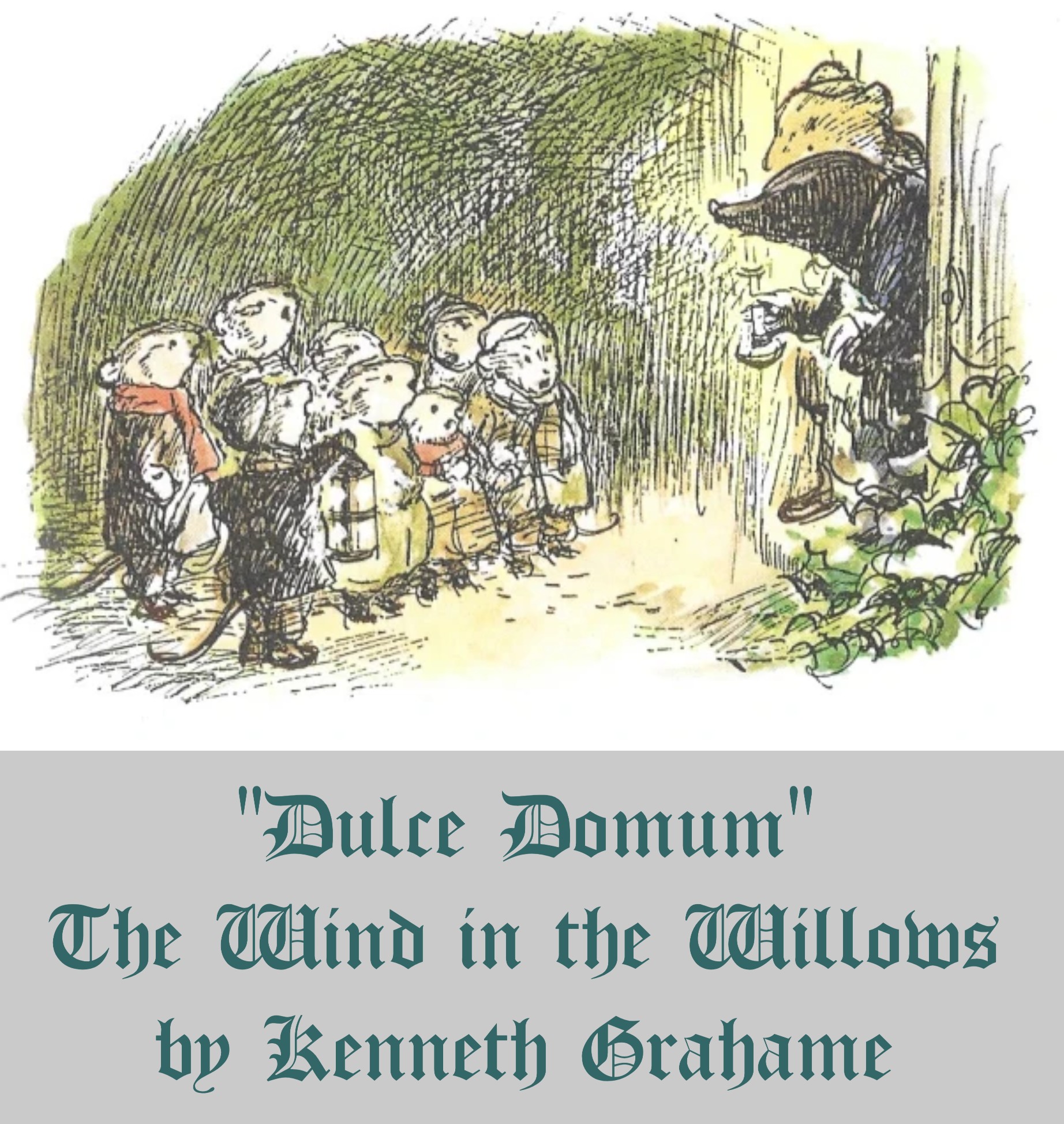
Also, there are several books I love in which Christmas plays but a part. Still, because of the tender, memorable scenes of Christmas they depict therein, I’ll mention a few of my favorites: The Wind in the Willows by Kenneth Grahame; Pickwick Papers by Charles Dickens; Wuthering Heights by Emily Bronte; Little Women by Louis May Alcott; The Lion, the Witch and the Wardrobe by C. S. Lewis; The Long Winter by Laura Ingalls Wilder; Anne of Green Gables by Lucy Maud Montgomery; Great Expectations by Charles Dickens; and Persuasion by Jane Austen.

Merry Christmas reading!

Saturday, December 31, 2022

Ending 2022’s Reading: A Review, Recommendations, and Resolutions

The year 2022 was not a record year for my reading – there was too much time taken up with vertigo recovery, our care for Carol Coppi, our involvement with my little sister in Wichita, and the ever-busy tasks of Vital Signs Ministries. And, alas, my reading took a pretty big hit with the ending of the Notting Hill Napoleons, our remarkably stimulating book club of 30 years. However, I still managed to slip in 6 dozen. 

As usual, many of these books were re-reads as I thoroughly enjoyed checking in again with such dear, lifelong friends as Alexander Dumas, Rafael Sabatini, Samuel Eliot Morison, C.S. Lewis, Robert Louis Stevenson, Jan Karon, G.K. Chesterton, John Buchan, William Shakespeare, Michael Ende, Edna Ferber, Owen Wister, Joni Eareckson Tada, Bess Streeter Aldrich, and Charles Dickens. 

But I made some new friends in 2022 too. Hunting the Nazi Bomb by Damien Lewis, Your Time Is Now by Jonathan Evans, Seven Men of Gascony by R.F. Delderfield, The Admirals by Walter Borneman, Created Equal (Clarence Thomas in His Own Words) edited by Pack and Paoletta, Johnny Tremain by Esther Forbes, The Apostate by Mark Christian, and The Book of Signs by David Jeremiah. All of the above titles made 4 stars in my ratings and are therefore enthusiastically recommended to you all. 

So there you have a very brief review plus a few recommendations. How about the resolutions then? Well, even now I have begun re-reading the several books connected to a seminar I’m presenting at the Rochester L’Abri’s annual conference on February 17 & 18. That presentation is entitled Beware the Mad Scientist: Divine Warnings Against “Playing God” from Classic Literature and it will cover Frankenstein by Mary Shelley, The Island of Dr. Moreau and The Invisible Man by H.G. Wells, 20,000 Leagues Under the Sea by Jules Verne, Dr. Jekyll and Mr. Hyde by Robert Louis Stevenson, and Dr. Faustus by Christopher Marlowe.  

Beyond that project, my reading will most likely continue along regular routes. I will spend most of my reading time with those authors near and dear to me while occasionally investigating others.  Of course, I do have a few specific projects in mind (besides the L’Abri responsibilities) for 2023. They include my bi-annual reading of Heaven by Randy Alcorn; a few classic commentaries on books of the Bible by men like Harry Ironside; more Dickens and Shakespeare; a first time read of Robert Bork’s book The Tempting of America and George Gilder’s Men and Marriage; and jumping back into the stirring adventures of Sherlock Holmes, The Lord of the Rings, and The Chronicles of Narnia

Want to come along?

Thursday, June 16, 2022

Reading Together

Reading quality books is a very good thing.  Indeed, as almost everyone would agree, such a practice makes a person smarter, more interesting, and more appreciative.  And discussing those books with others only increases those values.  This is why Claire and I started the Notting Hill Napoleons book club way back in 1992 – a book fellowship involving Christian friends who read a classic novel every month and then get together to talk about it.  That group, by the way, is still going strong for we see how important it has been in not only stimulating us to read more, but also in sharpening our skills in literary criticism, meaningful conversation, and the application of a book’s lessons to practical life.

It was for the same reasons that Vital Signs Ministries began hosting book discussions way back in the 1990s and our current practice includes both small and large group book discussions.  The former is usually an agreement of 1-4 people to read the same book and discuss it over lunch at a coffee shop or cafe, while the latter takes the form of an evening party or Saturday morning brunch which we host at our home. Either way, we're encouraged (and made accountable) to read.

And to waste less time in more trivial pursuits.

The books we choose for these discussions cover a wide range – history, the culture wars, literature, and Christian living.  But they are all selected for the purpose of making us more informed, effective, and consistent servants of Christ’s kingdom. Want a few examples? Sure, let me list a few of the more memorable titles and authors from over the years: 

Pilgrim’s Progress by John Bunyan; 
Heaven by Randy Alcorn; 
Judging Thomas: The Life and Times of Clarence Thomas by Ken Foskett; 
Infidel by Ayaan Hirsi Ali; 
A Christian Manifesto by Francis Schaeffer; 
A Hobbit, a Wardrobe, and a Great War by Joseph Loconte; 
Eugenics and Other Evils by G.K. Chesterton; 
The Wind in the Willows by Kenneth Grahame; 
Amazing Grace: William Wilberforce and the Heroic Campaign to End Slavery by Eric Metaxas; 
The Chronicles of Narnia by C.S. Lewis:
Men in Black: How the Supreme Court is Destroying America by Mark Levin; 
Check with Chip on Stem Cell Research by Chip Maxwell; 
Enemies and Allies by Joel Rosenberg; 
Heaven: Your Real Home by Joni Eareckson Tada; 
Everlasting: God’s Faithfulness to Israel by Stuart Cunliffe; 
The Rush Revere books by Rush Limbaugh; 
The Screwtape Letters by C.S. Lewis. 
And the latest?  The Apostate by Dr. Mark Christian. 

If you are interested in joining us for these Vital Signs book discussions, please let us know.  And we will, of course, continue to promote them beforehand in our monthly letters and Vital Signs Blog.

Thursday, January 13, 2022

Running After One's Hat...for 49 Years

It was in the spring of 1973 that I was browsing through The Antiquariam, a used book store in the Old Market section of downtown Omaha, when I discovered a somewhat battered, orangish copy of what was soon to become a life-changing book. I had experienced a few such encounters with books before this, notably Fyodor Dostoevsky's The Brothers Karamazov (which influenced my conversion to Christianity) and, in later years, Henry Ironside's Commentary on Ephesians, C.S. Lewis' Screwtape Letters and Mere Christianity, Francis Schaeffer's The Church at the End of the 20th Century and A Christian Manifesto.

But the book I picked up at The Antiquarium was unique in several points. For instance, it served to introduce me to a writer who was remarkably talented in many genres. Indeed, this particular book showcased the writer's skill in poetry, essays, journalism, literary criticism, and short stories. There was an especially arresting quality about the writer's perspective as well. He looked at the same things that others did but from a different angle, one that illuminated and made memorable the truth of the thing. And finally, he was a master wordsmith who wrote in a style that liberally used metaphor, symbol, paradox, and humor -- and yet one which produced an analysis of even complex matters that was clear as glass. 

And I'd better add this. The writer was an absolute delight to read! Fascinating, provocative, convincing, inspiring, and, like I said, quite funny. Even when he was making the most serious of moral exhortations, he was able to do so with mirth, wit, and a charming confidence.

The writer I'm speaking of is G.K.Chesterton and the book I found there in the stacks was The Man Who Was Chesterton, a marvelous sampling of his incomparable work. That book would end up changing my life by introducing me to a writer who would become a life-long inspiration and friend.

Not bad for three dollars.

But before I knew of those GKC books and poems that would become treasured reading for me down through the years (The Man Who Was Thursday, Manalive, "Lepanto", Orthodoxy, the Father Brown stories, Heretics, The Napoleon of Notting Hill, The Thing, The Club of Queer Trades, "The House of Christmas," "The Donkey," the numerous collections of essays, and much more), I was first drawn in through reading just one enchanting essay while standing in the dark stall of that Old Market book shop. 

That essay was called "On Running After One's Hat" and it was for that essay alone that I bought the book and began my adventure.

By the way, if you're interested, that very essay, "On Running After One's Hat," can be read on-line right here. Go ahead; do it! And I hope that it stimulates and delights you like it did me those many years ago.


Tuesday, November 23, 2021

5 Star Christmas Reading (And a Few Runners Up)

With no time in this busy but beloved holiday season to give individual reviews of the books I’m going to list, you will simply have to do with my placing them in 3 categories. The first is the 5 Star Recommendations which means they are among my ultimate favorites for Christmas reading. Indeed, several of these occupy some of our Yuletide hours almost every year. They cover a wide range of genres: theological, classic novels, juvenilia, modern inspirational, short stories, even history. 

However, I do not list here those readings which should be considered mandatory for Christmas; namely, the historical accounts of gospels Matthew and Luke as well as the classic Christmas poetry from the likes of G.K. Chesterton, Alfred Lord Tennyson, Dylan Thomas, Leslie Norris, Edgar Guest, T.S. Eliot, Christina Rossetti, Henry Wadsworth Longfellow, and many more.

The books in the second category earn 4 Stars in my reckoning as they too rate high regard. I guess that’s true of even those in the third category which I’ll simply call “Honorable Mention.” I’d recommend them all. After all, the purpose of this exercise is to provide a bit of stimulation and assistance for friends who desire to make reading an important part of their Christmas joys. So, here we go.

5 Star Recommendations

* Shepherds Abiding (Jan Karon)

* A Christmas Longing (Joni Eareckson-Tada)

* A Christmas Carol, Cricket on the Hearth, The Chimes, The Battle of Life, The Ghost’s Bargain, and The Haunted Man (Charles Dickens)

* Spirit of Christmas: Stories, Poems, Essays (G. K. Chesterton)

* The Christmas Room (Denny Hartford)

* God With Us (John MacArthur)

* Snow (Calvin Miller)

* A Treasury of Christmas Stories (Including The Other Wise Man) (Henry Van Dyke)

* The Gift of the Magi (O. Henry)

* The Freedom Train Christmas, The Winter in the Woods, and Christmas of the Talking Animals (Denny Hartford)

* Beasley’s Christmas Party (Booth Tarkington)

* Joy Born at Bethlehem: 19 Christmas Sermons (Charles Spurgeon)

4 Star Recommendations

* Letters from Father Christmas (J. R. R. Tolkien)

* Hercule Poirot’s Christmas (Agatha Christie)

* O Little Town (Don Reid)

* Christmas Every Day (William Dean Howells)

* Christmas at Thompson Hall (Anthony Trollope)

* The Drum Goes Dead (Bess Streeter Aldrich)

* The Quiet Little Woman, Tilly’s Christmas, Rosa’s Tale, The Abbott’s Ghost, A Merry Christmas, and A Country Christmas (Louisa May Alcott)

* Old Christmas (Washington Irving)

* Nutcracker (E.T.A. Hoffmann with illustrations by Maurice Sendak)

* The Bird’s Christmas Carol (Kate Douglas Wiggin)

* Dakota Christmas (Joseph Bottum)

* Christmas Sermons (Dietrich Bonhoeffer)

* Good Tidings of Great Joy (Sarah Palin)

“Honorable Mention”

* Finding Noel (Richard Paul Evans)

* The Golden Ring: A Christmas Story (John Snyder)

* The Tailor of Gloucester (Beatrix Potter)

* Silent Night: The Story of the World War I Christmas Truce (Stanley Weintraub)

* The Christmas Train (David Baldacci)

* The Beggar Boy at Christ’s Christmas Tree (Fyodor Dostoevsky)

* The Little Match Girl (Hans Christian Anderson)

* Miracle on 34th Street (Valentine Davies)

* The Adventure of the Blue Carbuncle (Arthur Conan Doyle)

* An English Murder (Cyril Hare)

* A Christmas Most Foul: A Collection of Holiday Mysteries (A variety of mystery’s Golden Age authors)

* The Twenty-four Days Before Christmas (Madeleine L’Engle)

* Big Book of Christmas Mysteries (A variety of well-known authors)

* A Christmas Inspiration (Lucy Maud Montgomery)

* The Life and Adventures of Santa Claus (L. Frank Baum)

And two more items before I close. First of all, there are several books I love in which Christmas plays but a part. Still, because of the tender, memorable scenes of Christmas they depict therein, I’ll mention a few of my favorites: The Wind in the Willows by Kenneth Grahame, Pickwick Papers by Charles Dickens, Wuthering Heights by Emily Bronte, Little Women by Louis May Alcott, The Lion, the Witch and the Wardrobe by C. S. Lewis, The Long Winter by Laura Ingalls Wilder, Anne of Green Gables by Lucy Maud Montgomery, Great Expectations by Charles Dickens, and Persuasion by Jane Austen.

Finally, I’m hoping that there will be some new favorites in books I have recently ordered. Those include 3 Bible studies from Pastor Stephen Davey (From Babylon to Bethlehem, The Original Christmas Carol, and  The Chronicles of Christmas); Dasher: How a Brave Little Doe Changed Christmas Forever by Matt Tavares; Twelve Nights by Urs Faes; Afterward: A Ghost Story for Christmas by Edith Wharton; The Night Before Christmas by Nikolai Gogol; and Home for Christmas by Lloyd C. Douglas. I’ll let you know which ones of these (if any) make the grade. 

Merry Christmas reading!

Friday, January 01, 2021

The Year in Reading

Despite the horrors and pressures of the year 2020, there were plenty of opportunities for intercession, for love and good deeds performed in the Holy Spirit, for fellowship among the “forever family” of God, for study of and conversation about the Bible, and yes, for reading other books as  well.

In this last category, 2020 was an exceptional year for me, just under a hundred books. My reading adventures covered the usual genres: history, novels, mystery and adventure books, Christian themes, even a bit of poetry this year as Claire and I started a project of recording our reading of poems aloud. We did this for the residents of senior living facilities as an extra gift besides the 9-page activity packets we have been providing every week since the quarantines locked us out from presenting our “When Swing Was King” shows. We sent DVD copies of our poetry reading to the activity directors and also uploaded them onto You Tube. (You can, by the way, avail yourself of those activity packets -- all 43 of them so far -- by going to this specific page in the Vital Signs Ministries website. If you are a senior or a boomer or know people who are in those age categories, these can be a great source for entertainment, encouragement, even inspiration.)

But back to the books. Before I get to those that rated 4 Stars, I'll mention some of the authors of adventures and mysteries I've read (or, in many cases, re-read) for simple entertainment that I would recommend: Dorothy Sayers, Ellery Queen, Alistair MacLean, Patricia Wentworth. 

And now the 4 Star reads. I list them by category (though some overlap categories) and you'll note that the titles that are underlined are re-reads. Indeed, some of them are old and very dear friends. After the listing, I add a quick note about the surprises and biggest blessings of the years in books.

Bible study and Christian living:

**** Christmas Sermons (Dietrich Bonhoeffer) 

**** True Spirituality (Francis Schaeffer)

**** Jesus On Trial (David Limbaugh)

**** Pilgrim's Progress (John Bunyan)

**** Everlasting: God's Faithfulness to Israel (Stuart Cunliffe)

**** The Meaning of Persons (Paul Tournier)

**** Worry Less, Live More: God's Prescription for a Better Life (Robert J. Morgan)

History:

**** Grant Moves South (Bruce Catton)

**** To Wake the Giant: A Novel of Pearl Harbor (Jeff Shaara)

**** A Hobbit, a Wardrobe, and a Great War (Joseph Loconte)

**** The Swamp Fox: How Francis Marion Saved the American Revolution (John Oller)

Novels:

**** Pickwick Papers (Charles Dickens)

**** Wake of the Perdido Star (Gene Hackman & Daniel Lenihan)

**** The Hunt for Red October (Tom Clancy)

**** The Hobbit (JRR Tolkien)

**** The Fellowship of the Ring (JRR Tolkien)

**** The Two Towers (JRR Tolkien)

**** The Return of the King (JRR Tolkien)

**** Alice Adams (Booth Tarkington)

**** Home to Holly Springs (Jan Karon)

**** In the Company of Others (Jan Karon)

**** Oliver Twist (by Charles Dickens)

**** Out of the Silent Planet (C.S. Lewis)

**** Perelandra (C.S. Lewis)

**** That Hideous Strength (C. S. Lewis)

**** Dream Days (A.A. Milne)

**** The Never-ending Story (Michael Ende)

**** Somewhere Safe with Somebody Good (Jan Karon) 

**** Robinson Crusoe (Daniel Defoe)

**** The Mysterious Island (Jules Verne)

**** The Wind in the Willows (Kenneth Grahame)

**** Barnaby Rudge (Charles Dickens)

**** The Black Tulip (Alexandre Dumas)

**** A Lantern In Her Hand (Bess Streeter Aldrich)

Okay, about the surprises and special blessings. I was profoundly moved by Everlasting: God's Faithfulness to Israel written by a pro-life colleague in Great Britain, Stuart Cunliffe. I was greatly encouraged and helped by Robert J. Morgan's Worry Less, Live More: God's Prescription for a Better Life. That book came as a gift because we support the Billy Graham Evangelistic Association and I came very close to putting it aside. But I ended up taking it on our two-week working vacation in the Ozarks and I am so glad I did. 

I liked A Hobbit, a Wardrobe, and a Great War by Joseph Loconte so much I bought several copies and sent them to friends. It was terrific. 

In the novel category, most of the books are among those old and dear friends I mentioned. But A Lantern In Her Hand by Bess Streeter Aldrich was a new read for me and I really loved it. So did our book club, the Notting Hill Napoleons. However, Jan Karon is becoming an even more important author to me (she has been for Claire for many years) and I find her Fr. Tim Kavanaugh a source of great stimulation and influence. Indeed, I wrote an appreciative essay about the Mitford novels which compared them to G.K.Chesterton and Francis & Edith Schaeffer. You'll find that essay here.

Tuesday, February 12, 2019

Bookin’ Along in the New Year

Due to the winter weather which has precluded outdoor activities (especially my walking & praying routines) AND a trip to the March for Life in Washington D.C. which created a lot of hours on planes and in hotel rooms (including being stranded in Chicago for a day), I have done a bit more reading than normal in these 6 weeks since my last book roundup here.

There have been a few clunkers in that bunch of 19 books read since January 1 — books that I gave only 1 or 2 Stars. And there have been several 3 Star books that I enjoyed, found of value, and which, in certain circumstances, I would recommend.

But it’s the 4 Star books that I would recommend most heartily, books of excellence and high significance. Here’s the specific breakdown according to genre with the titles in bold showing books that were, in fact, re-reads for me.

Fiction:
* The Lone Star Ranger (Zane Grey) - 1 Stars
* The Mysterious Island (Jules Verne) - 4 Stars
* Kim (Rudyard Kipling) - 2 Stars
* The Paradoxes of Mr. Pond (G.K. Chesterton) - 3 Stars
* The People of the Mist (H. Rider Haggard) - 2 Stars
* Journey to the Center of the Earth (Jules Verne) - 1 Star

Historical Fiction:
* Fair Stood the Wind for France (H.E. Bates) - 3 Stars
* Valley Forge: George Washington and the Crucible of Victory (Newt Gingrich, William R. Forstchen, Albert S. Hanser) - 4 Stars
* The Cornet of Horse: A Tale of Marlborough’s Wars (G.A. Henty) - 3 Stars
* August 1914 (Alexander Solzhenitsyn) - 4 Stars

History: 
* The Wright Brothers (David McCulloch) - 4 Stars
* Dodge City: Wyatt Earp, Bat Masterson, and the Wickedest Town in the American West  (Tom Clavin) - 3 Stars
* True Detective Stories from the Archives of the Pinkertons (Cleveland Moffet) - 2 Stars
* Lonely Vigil: Coastwatchers of the Solomons (Walter Lord) - 4 Stars

Drama:
* Once in a Lifetime (George S. Kaufman & Moss Hart) - 3 Stars
* You Can’t Take It With You (George S. Kaufman & Moss Hart) - 4 Stars
* The Man Who Came to Dinner (George S. Kaufman & Moss Hart) - 3 Stars

Culture & Politics:
* Ship of Fools (Tucker Carlson) - 4 Stars

Theology & the Christian Life:
* Life Is Mostly Edges: A Memoir (Calvin Miller) - 3 Stars
* Death in the City (Francis Schaeffer) - 4 Stars

Friday, November 16, 2018

Responding to a Very Sorry List of "Books for Boys"

It’s been over 10 years now since I first described my differences with a list of “books for boys” that had been compiled by the U.K. newspaper, the Guardian. Well, since that list still attracts some interest (you can find it here) and because I was recently asked about what I considered a good selection of “books for boys,” I am posting a slightly edited version of the piece I wrote way back in 2007. Here it is.

What's Missing from the Guardian's List of Books For Boys? Plenty!

The Guardian’s list of “160 Books All Boys Should Read” proved very disappointing to me. In fact, I consider it an absolutely terrible list, a compelling example of just how far afield we have traveled from the high standards of literature society once held.

There were just 7 books of the entire 160 that I had read. No, make that only 6, because my version of Kidnapped was, alas, not the “graphic novel in full colour” edition that the Guardian suggested.

But what was most significant was what the list left out. Here are just a few of the most serious omissions. There was, for instance, no Sir Walter Scott title that made the list. That’s right. None. And no Conan Doyle or Jack London either. No G.A. Henty. No James Fenimore Cooper, John Buchan, Jules Verne, or Edgar Allan Poe.

But that’s not all. 

Watership Down didn't make the list, nor did Kon-Tiki, Raffles, Endurance, The Scarlet Pimpernel, Johnny Tremain, Robin Hood, Sink the Bismarck, The Iliad, or any of the Hardy Boys or Tom Swift mysteries. Even the Bible was absent!

James Barrie was missing from the list. So too were James Herriot, O. Henry, Herman Melville, Rafael Sabatini, and the Brothers Grimm. 

And, it’s hard to believe, but their vapid, political-incorrect list of 160 books didn’t consider even Charles Dickens or Alexander Dumas!

Jonathan Swift wasn't there. H.G. Wells wasn't there. G.K. Chesterton, Erle Stanley Gardner, and Washington Irving were not there. A.E. W. Mason or H.E. Bates were not there. And even taller literary giants were inexplicably left cooling their heels in the Guardian's outer office — C. S. Lewis, George Orwell, Victor Hugo, Kenneth Grahame, C. S. Forester, and Horatio Alger.

Of course, you can guess by now that such sparkling historians as Winston Churchill, Samuel Eliot Morison, Walter Lord, Shelby Foote, and John Toland were not in the list. That’s a genuine crime. But there was also no Tarka the Otter; no Song of Roland; no Don Quixote; no Lorna Doone; no Neverending Story; no Prisoner of Zenda; and no Ben-Hur

You've got to be kidding!

Realizing what literary standards have been so shamefully omitted from the list of “160 Books That All Boys Should Read” was very disconcerting.

So, I hope that this humble post (with its mention of so many wrongfully neglected works and authors) will be a reminder to others (like parents!) of what classic literature was once considered to be. And I urge Book Den visitors to remember what immense treasures are still there for boys (of all ages) to discover.

Friday, December 29, 2017

The Year in Review (In Reading, That Is)

2017 is almost in the books -- pun intended, I suppose -- and so a quick review of this year’s reading is appropriate. I finish the year a little above my average number of books read. That's good. Several of those were lively, entertaining reads with little ongoing relevance like a couple of Alistair MacLean thrillers, Bill Buckley's Blackford Oakes series, and Donald Hamilton’s Matt Helm series that I re-read early in the year (for the umpteenth time) and then gave away to get them out of the house for good. Kinda’ like eating all the cookies before going on a diet!

One of my reading resolutions for the year was to stage a substantial return to Shakespeare with an ambitious schedule of one a month. But, alas Poor Yorick, I only got in 8. I read about the same number of G.A. Henry novels as well. He is almost always a delightful read and I like learning the history he packs into his adventure novels. A couple of Jeff Shaara novels came along in the Notting Hill Napoleons selections: The Frozen Hours and The Fateful Lightning. 

I re-read a lot of C.S. Lewis this year: Letters to Malcolm: Chiefly on Prayer, The Abolition of Man, The Pilgrim’s Regress, Mere Christianity, The Great Divorce (finished in the shadow of the 14, 265 ft. Mt. Quandary which I climbed earlier in the day), and The Screwtape Letters. Great stuff.

I re-read Boris Pasternak’s Dr. Zhivago this year and, surprisingly, found it rather disappointing. Oh well, tastes change; readers change. Much more satisfying in fiction explorations were Ice Palace by Edna Ferber, Little Women by Louisa May Alcott, Valley Forge: George Washington and the Crucible of Victory by Newt Gingrich & William R. Forstchen, The Innocence of Fr. Brown by G.K. Chesterton, and the lengthy Japanese epic Musashi by Eiji Yoshikawa.

Other fiction of superb quality came this year from Charles Dickens: The Chimes, Cricket on the Hearth, A Christmas Carol and an assortment of shorter Christmas-themed stories. And the highlight of the Notting Hill Napoleons’ year (for me, anyhow) was our November reading of Dickens’ wonderful novel, Dombey & Son.

But I’m not quite done with the fiction favorites. I read the first 4 novels in Jan Karon’s Mitford series this year and loved each one: At Home in Mitford, A Light in the Window, These High, Green Hills, and Out to Canaan. I also returned to Middle Earth late in the year with spellbinding reads of J.R.R. Tolkien’s The Hobbit, The Fellowship of the Ring, The Two Towers, and The Return of the King. Terrific!

And there were a couple of exceptionally fun Christmastime reads -- The Big Book of Christmas Mysteries edited by Otto Penzler and 101 Dalmatians by Dodie Smith.

The year’s best non-fiction reading involved, as it always does for me, theology, history, and culture. Besides the C.S. Lewis stuff there was Kingdom Man by Tony Evans, A Torch Kept Lit by William F. Buckley, Who Built That: Awe-Inspiring Stories of American Tinkerpreneurs by Michelle Malkin, Thomas Jefferson and the Tripoli Pirates by Brian Kilmeade & Don Yaeger, Holiness in Hidden Places by Joni Eareckson Tada, and Happiness by Randy Alcorn.

And what would be the tops in my recommendations to others? That's too tough to call but these (in alphabetical order) would certainly be the finalists.

A Christmas Carol by Charles Dickens.
* Dombey & Son by Charles Dickens.
* Happiness by Randy Alcorn.
Holiness in Hidden Places by Joni Eareckson Tada.
Little Women by Louisa May Alcott.
* Mere Christianity by C.S. Lewis.
* The Middle Earth books by J.R.R. Tolkien.
* The Mitford books by Jan Karon.
* Musashi by Eiji Yoshikawa.
* The Screwtape Letters by C.S. Lewis.

Thursday, December 07, 2017

Chesterton's Wild Knight

Here's a stirring poem for prophets, warriors, and all others who love justice enough to fight for it.

The Wild Knight
(G.K. Chesterton)

 The wasting thistle whitens on my crest,
The barren grasses blow upon my spear,
A green, pale pennon: blazon of wild faith
And love of fruitless things: yea, of my love,
Among the golden loves of all the knights,
Alone: most hopeless, sweet, and blasphemous,
The love of God:
        I hear the crumbling creeds
Like cliffs washed down by water, change, and pass;
I hear a noise of words, age after age,
A new cold wind that blows across the plains,
And all the shrines stand empty; and to me
All these are nothing: priests and schools may doubt
Who never have believed; but I have loved.
Ah friends, I know it passing well, the love
Wherewith I love; it shall not bring to me
Return or hire or any pleasant thing—
Ay, I have tried it: Ay, I know its roots.
Earthquake and plague have burst on it in vain
And rolled back shattered—
        Babbling neophytes!
Blind, startled fools—think you I know it not?
Think you to teach me?  Know I not His ways?
Strange-visaged blunders, mystic cruelties.
All! all! I know Him, for I love Him. Go!

So, with the wan waste grasses on my spear,
I ride for ever, seeking after God.
My hair grows whiter than my thistle plume,
And all my limbs are loose; but in my eyes
The star of an unconquerable praise:
For in my soul one hope for ever sings,
That at the next white corner of a road
My eyes may look on Him....
        Hush—I shall know
The place when it is found: a twisted path
Under a twisted pear-tree—this I saw
In the first dream I had ere I was born,
Wherein He spoke....
        But the grey clouds come down
In hail upon the icy plains: I ride,
Burning forever in consuming fire.

Friday, September 29, 2017

Catching Up on My Reading

Before we head out to Branson for a couple of weeks -- momentous days that will include a 4-day family reunion with all my siblings and their spouses as well as a working vacation for Claire and I afterwards, I thought I’d clear the decks here at The Book Den with a quick review of books read since my last catch up post (August 10). I do so with pleasure because there were several that I recommend.

The first on the list is one of those very old mysteries that I love to download from Kindle. And I love to download them because 1) I love reading old books. 2) Many of these old books are out of print and otherwise unobtainable. And 3) Many of these Kindle editions are completely free! Can’t beat that. In this latest case, the old book was actually an early 20th century collection of short stories by British writer Thomas W. Hanshew entitled Cleek, The Master Detective.  Great stuff. (Recommended.)

Next up was A Light in the Window, Jan Karon’s second book in the Mitford series of novels that Claire loves so much. I’m beginning to love these books too. In fact, I hope to read another (or two) down in Branson. (Highly recommended.)

I went on a bit of a Shakespeare run in August and early September with six of the Bard’s great plays: “Antony & Cleopatra,” “Measure for Measure,” “Julius Caesar,” and then all three plays in the “Henry VI” trilogy.  This is truly superb literature from one of the most original, most insightful, and most skilled of writers. (Highly recommended.)

A theological work of value was Jeremiah: Prophet of Judgment by Irving L. Jensen.

I enjoyed (for the most part) a free Kindle book of poetry dealing primarily with domestic life from Christopher Morley. It was called Chimneysmoke.

I re-read and, in some cases, listened to an audio rendition of the G.K. Chesterton short stories, The Innocence of Fr. Brown. (Recommended.)

I thrilled my way through two rousing G.A. Henry adventure novels: Held Fast For England: A Tale of the Siege of Gibraltar and St. George for England. (Recommended, especially the first title.)

In anticipation of meeting Shun Lee Fong, I read his book of short essays, The Saints & the Poets. I enjoyed it very much. Indeed, here’s what I wrote in an Amazon review of his book: The Saints and the Poets is an engaging collection of short, charmingly personal, and ultimately inspiring essays. Fong writes as an artist to artists and yet the life lessons he presents can be easily understood and practically embraced by any reader. Those lessons deal with such topics as creativity, vision, relationships, responsibility, and faith. All relevant matters certainly. And, along the way, there is humility, wit, humor, and sage advice. I'm pretty sure other readers will respond to The Saints and the Poets as I did; namely, to hope Mr. Fong soon follows with a second volume. (Obviously, I recommend it.)

And finally, our September selection for the Notting Hill Napoleons was The Frozen Hours by Jeff Shaara, a detailed historical novel of one of the key campaigns in the Korean War. Fascinating, gripping, maddening, and very somber reading but quite worth the effort. (Recommended.)

Friday, July 14, 2017

Summer Reading (So Far)

The primary theme for my summer has been C.S. Lewis.  That has coincided with several showings at our home of David Payne’s one-man play, “An Evening with C.S. Lewis.”  So far we have entertained (and inspired) 36 guests with this marvelous video.  Also this summer, Claire and I have organized a couple of discussion parties dealing with classic Lewis titles – June was Mere Christianity and coming up on August 12th will be The Screwtape Letters.  But, in addition to re-reading these, I have, with great delight and appreciation, returned to several other Lewis books in these last couple of months: The Abolition of Man, Pilgrim’s Regress, The Great Divorce, and The Dark Tower & Other Stories.

The last title in that list is made up of very short stories and fragments of stories that C.S. Lewis’ brother Warnie collected from the desk after he died.  Seeing that “Jack” (C.S. Lewis) hadn’t cared to publish them or even organize them, Warnie concluded they should be burned up.  But in stepped Walter Hooper, an exorbitant fan of C.S. Lewis who some believe was a bit of an a exploiter as well.  He took the papers, sifted through them, and found enough to publish.

I think Lewis would have preferred they would have gone up in flames.  And except for a few sentences that I found of interest, I would agree.

Indeed, the reason C.S. Lewis discarded these things were because they were not only incomplete and unpolished, they weren’t very good. And that’s fine.  In fact, it made me appreciate Lewis more as both a writer and a Christian gentleman to see that he was a craftsman who knew the difference between good writing and bad.  And the bad he rejected even though, in the latter decades of his life, he could have profited financially by publishing anything at all that had his name on the manuscript.

Let’s face it — our attempts at art are like our attempts at anything in life. Sometimes we succeed magnificently; sometimes we perform adequately; sometimes we fail.  When we achieve the first level, we should be humble and thank God for His grace active in us.  When we hit only the second level, we should redouble our efforts and seek to improve.  But when we dip into the lowest level, we should quickly admit it, toss it into the bin, and start over.  Jack Lewis did that with the manuscripts in the collection that became The Dark Tower & Other Stories. Walter Hooper should have respected Lewis' wishes. What Lewis had quite literally, put into the trash, should have stayed there.

As to the other Lewis titles I’ve re-read this summer, there is little to say except that they were all excellent, all provocative, all 5-star recommendations.

The other books of summer?  The May and June selections of the Notting Hill Napoleons were The Gates of Doom by Rafael Sabatini and Riders of the Purple Sage by Zane Grey. Both were enjoyable and our book club discussions over both were lively and fun. Nevertheless, I would rate the Sabatini higher.

Claire and I did follow up on the Western genre, though, when we listened to an unabridged audio book of Louis L’Amour’s The Rider of the Ruby Hills on our way out to Colorado early in July. On the way back, we opted for a non-fiction title and were really pleased we did so.  The book was Michelle Malkin’s Who Built That: Awe-Inspiring Stories of American Tinkerpreneurs read superbly by the author.

The other two books of summer (late spring too, I guess) were also terrific books. One was a collection of the “obituary columns” for which William F. Buckley was well known, A Torch Kept Lit: Great Lives of the Twentieth Century. These columns from the pages of Buckley’s magazine National Review span the decades and cover various public figures, personal friends, and even intense antagonists – many with whom Buckley maintained warm friendships.  Imagine reading Buckley’s reminiscences of Whittaker Chambers, Alger Hiss, John Kennedy, David Niven, John Lennon, his wife Patricia, his mother and father, Richard Nixon, Gore Vidal, and many more. The book is a fabulous look back into 20th Century history -- and into the personal life and character of Bill Buckley himself.

The other grand read of these two is the first novel in Jan Karon’s much-loved Mitford series, At Home in Mitford.  Claire loves these novels and has read through the series a couple or three times already. Indeed, she’s recently started a small book club devoted to the Jan Karon series.  For my part, I had read this first novel 3 or 4 Christmases ago and, though I liked it well enough, it certainly didn’t capture me like it did on my recent re-reading of it. Now I found it not only a joyous read but a convicting one also, particularly as I reflected on the protagonist’s dedication to prayer, preaching, hospitality, and serving the needs of his small church.  This time I found myself struck with how profound a picture the novel portrayed of the winsome lifestyles of faith and compassion as insisted in the writings of Francis and Edith Schaeffer and G.K. Chesterton.  So I think I’m hooked too and, as soon as I’m free, I’ll be starting into the whole series as well.

Tuesday, May 31, 2016

The Year (So Far) in Books: Concerned Primarily with Lewis and Dumas

This year’s reading has, to be quite honest, presented quite a challenge.  Sure, there have been some fun, escapist reads along the way (a John D. MacDonald, an Arnold Bennett ghost story, a couple of Ngaio Marsh mysteries, a Mary Roberts Rinehart thriller, and a few others), but most of this year’s books have been in keeping with the New Year’s resolutions I’ve been making for awhile now; namely, to spend more of my evenings with the really quality stuff.  That means the best history, theology, and classic literature.

The theological books read thus far this year have been profound and helpful. There have been a few I had never read before but, as is usual, a lot more which are re-reads. 2016’s list so far includes Heaven by Randy Alcorn, The Snakebite Letters by Peter Kreeft, Fool’s Talk by Os Guinness, Manalive and Orthodoxy by G.K. Chesterton, and I’m still slogging through Augustine’s Confessions.  Perhaps I should also include in this category the “space trilogy” of C.S. Lewis: Out of the Silent PlanetPerelandra, and That Hideous Strength.

Other books? The cold war novel by Commander Edward L. Beach, Cold Is the Sea, was very good as was Jeff Shara’s Civil War story, The Smoke at Dawn.  I also enjoyed The Swiss Family Robinson by Johann David Wyss, Twelfth Night by Edward deVere (aka William Shakespeare), and a reprint of a 1955 classic I picked up in Estes Park, Colorado – Bob Flame, Rocky Mountain Ranger.  Oh yes, there was another truly exceptional book that Claire and I enjoyed via CDs that played while we drove to San Antonio, Texas in our “When Swing Was King” road trip.  It’s a book Claire and I both highly recommend for fun, inspiration, family values, history, and…did I already mention, fun?  The book is Cheaper by the Dozen by Frank Bunker Gilbreth, Jr. and Ernestine Gilbreth Carey.

But the most extensive reading so far in 2016 has been my tackling again the immense series of Alexandre Dumas’ d’Artagnan adventures: The Three Musketeers, Twenty Years AfterThe Vicomte de BragelonneLouise de la Valliere, and finally The Man in the Iron Mask.  3,282 pages of swashbuckling action, mystery, patriotism, romance, international intrigue, history (as liberally re-interpreted by Dumas), heroism, humor, and, of course, virtuous and undying friendship.  After going through these books again, Dumas’ place as one of my five favorite authors is more secure than ever. Indeed, Dumas’ place is so secure that my next project is his 1844 classic, The Count of Monte Cristo.  That's another 1,240 pages. Whew!  

But in the midst of this next Dumas novel, the selection for two months of the Notting Hill Napoleons, we are riding into another grand adventure…a summer reading project of C. S. Lewis’ The Chronicles of Narnia. We have invited readers of all ages from our church to join other friends in this fun and inspirational series, complete with discussion guides, quizzes, and a couple of parties where we can talk about what we’re experiencing in Narnia. 

By the way, if you’re interested, just let us know.

Wednesday, March 23, 2016

On Re-Reading G.K. Chesterton's "Manalive"

“A wind sprang high in the west, like a wave of unreasonable happiness.”

This wind, appearing in the first line of G.K. Chesterton’s short novel, Manalive, is a boisterous wind, blowing hats to the tops of trees, blowing Innocent Smith over a high garden wall, and eventually blowing clean apart the naïve (even nasty) worldviews held by the assembled cast of characters.  Furthermore, it is a wind that brings life and joy and purpose, proving in the end that the happiness it carried was, in fact, not unreasonable at all.

Chesterton foreshadows this explosion of good and jolly sense early on when he tells us this “was the good wind that blows nobody harm.”  Yet it was resisted at first by the two young couples into whose moribund company Innocent Smith suddenly appears and then more forcefully by the experts in materialist philosophy who end up prosecuting the uniquely adventurous hero of the novel.

Along the way, Chesterton’s wit and wisdom are on wonderful display.  So too is his artistic temperament, his poetic skills, his chivalrous ideals, and his moral courage. Manalive is a classic of inventiveness and fun. However, amid the riot of revelry and the kaleidoscope of color, there are quite serious lessons being taught. The reader will find himself challenged by the novel’s exhortations about love and marriage, contentment, modern philosophy, common sense and appreciation, the rule of courtesy, Christian apologetics, the ingenious thrift of the Swiss Family Robinson, democracy, property, the overreach of science, socialism, Christianity as a “creed of wonder,” spiritual homesickness, patriotism, and more.  I recommend Manalive heartily. No surprise there...I’ve been doing so for 30 years.

And yes, one can one re-read a work often and still find fresh enjoyment and profit. C.S. Lewis, perhaps thinking of Chesterton (one of his literary influences), once wrote, “One must read a good book at least once every ten years.” I wholeheartedly agree.  In fact, there are a dozen or more of my favorite books (Randy Alcorn’s Heaven, Alexandre Dumas’ Three Musketeers and The Count of Monte Cristo, J.R.R. Tolkien’s Lord of the Ring trilogy, Michael Ende’s The Neverending Story, C.S. Lewis’ Screwtape Letters, Conan Doyle’s Sherlock Holmes stories, Kenneth Grahame’s Wind in the Willows, history books by Walter Lord and Samuel Eliot Morrison, and yes, Chesterton’s Manalive) that I couldn’t possibly wait for ten years to get back to.

This time around, I had particular motivation to glean relevant truths from Manalive for it is one of a series of books I’m reading with friends this spring.  It’s a project meant to sharpen yet further our understanding and appreciation of key books by reading them together and then sharing with one another our responses.

And so with my latest reading of Manalive, I’m pleased to tell my partners in the project that I was moved on several points: 1) to dedicate myself anew to keeping spontaneity and romance, appreciation and gallantry in my marriage; 2) to review until I can clearly recall in detail Innocent Smith’s use of the pistol to illustrate the value of presuppositional apologetics; 3) to relish Chesterton’s unique skills in describing color and paradox and careful perceptions of everyday life; 4) to appreciate anew how strong a theme in Chesterton’s work is Christianity serving as man’s true and desired home; and 5) to better appreciate the gifts of everyday life, to see with more wondrous eyes the beauty of plain things.

Postscript 1: The first books in this spring reading project series were C.S. Lewis’ space trilogy; the next up (at least, in the original plan) is Francis Schaeffer’s The Church at the End of the Twentieth Century. The invitation to participate in this reading project, by the way, can be read here. And the resultant review of the space travel series can be found here.

Postscript 2: Reading often creates its own spin. Reading one book prompts you to read another that you hadn't planned on. That's certainly happening with this project. There were things in Out of the Silent Planet that caused me to go ahead and read a book given to me as a Christmas gift, Os Guinness' latest book dealing with Christian apologetics, Fool's Talk. I found it very good. And upon finishing Manalive, I found myself following up by re-reading one of G.K. Chesterton's best on apologetics, Orthodoxy. It too is terrific and the "combined weight" of reading these various titles dealing much with the same issues was of tremendous value.


Wednesday, March 02, 2016

Here's Spring's Reading Project

Dear friends,

Last summer I tried the experiment of inviting several friends to join me in reading Randy Alcorn’s Heaven and to write up their reactions to the book to be shared with others via email.

The initial response was positive but, except for some terrific reviews from Dr. Greg Gardner in Great Britain and Jim Bingham from here in the States (which were so good I posted them on Vital Signs Blog), I have little idea how others fared but I retain the hope that some of you were moved to read Alcorn’s wonderful book and thereby grow in your anticipation of the triumph and delight that waits for us all at the end of the age.  And I’m delighted with those results of the experiment that I know worked.  For instance, Greg and Jim had not read the book at all, but now have put it among their “must read” recommendations. That’s terrific.  Also, my pastor read our posts about the book (links to them had appeared on my Facebook page) and he was moved to ask me to teach a Sunday School series on Heaven.  Terrific again.  And finally, a third blessing -- through the resultant correspondence, other book recommendations from some of you were passed on to me.  Greg suggested Peter Kreeft’s old book, The Snakebite Letters and Pat Osborne suggested Os Guinness’ new book about apologetics Fool’s Talk.  I liked them both an awful lot. Both were provocative, well-written, and very helpful. I enthusiastically second their recommendations.

Therefore, with these positive benefits from that first experiment – and with high hopes that another invitation might involve more of you this time around – I am sending along a spring project for you to consider.  This one is a bit more open-ended in that it allows you to participate in 2 ways.  1) I am sending along titles of few of the books I’ll be reading this spring.  If you’re interested, choose one or more of them, read along, and drop me a line…or a longer review like Jim and Greg did. I would love to post them on Vital Signs Blog or The Book Den.  And, of course, even if you aren’t going to write anything up, you might still find the reading list of interest as you consider your own spring reading. 2) A second option is to send along a title of a book (or more than one) that you are currently reading.  Reviews of a few sentences would be extremely valuable to others but even a quick thumbs up or down would be helpful too.

I’m sending this to some of the same guys I did last year along with a few others.  I’m hoping many of you join in on some level.  Thanks for considering it.  And thanks for saying a prayer for the project’s success – that Christian men are stimulated to use their time wisely, to do the work of reading spiritually-enriching books, and to encourage one another in our common adventure in Christ.

So here’s my booklist. They’re all classics.  And all except the Augustine, they are all books I’ve read before. I do a lot of that.

Out of the Silent Planet, Perelandra, and That Hideous Strength (C.S. Lewis)
Manalive (G.K. Chesterton)
The Church at the End of the 20th Century (Francis Schaeffer)
Saving Leonardo (Nancy Pearcey)
Confessions (Augustine)

Of course, if you’re busy with other things or, for whatever other reasons, you’re not interested, that’s cool. We will keep in contact at other times and over different matters. But, of course, you can still lift up that prayer!


Wednesday, May 06, 2015

Twelve Tantalizing Questions for Book Readers

Using some of the existing questionnaires I found around the web, I've compiled this list of questions for my "bookish" friends. Would you like to answer, perhaps copy the list to pass around to friends and family? By all means, do so.

After listing the questions, I will post my answers below -- and Claire's too.

Then I'm going to send the questions to my fellow members of the Notting Hill Napoleons, our long-standing literary club. Maybe they'll send along answers I can post here as well. And if you would like to join in the project, send your answers along.

Here are the Tantalizing Twelve questions:

1) List ten of your favorite books in five minutes.

2) What’s the last really good book you read?

3) Do you finish every book you start?

4) Do you re-read books? Do you re-read any books more than once or twice? Like what?

5) Are there any authors whose work you have read completely? Or almost completely? Who?

6) Do you prefer fiction or nonfiction? Why?

7) Do you recommend books? If you do, give an example or two.

8) Do you read books that are more than one hundred years old?

9) What’s more important to you: the way a book is written or what the book is about?

10) Have you ever written a fan letter to an author?

11) Do you keep track of the books you read?

12) Okay, take a look at the list you made at the beginning.  Any changes you’d like to make?

And now for our answers.

1) List ten of your favorite books in five minutes. (I'll naturally assume the Bible would make your favorites list.)
Denny's answers:
Heaven by Randy Alcorn
The Count of Monte Cristo by Alexander Dumas
The NeverEnding Story by Michael Ende
Mere Christianity by C.S. Lewis
Manalive by G.K. Chesterton
The Lord of the Rings trilogy by J.R.R. Tolkien
The Civil War: A Narrative (3 Volumes) by Shelby Foote
A Christian Manifesto by Francis Schaeffer
Wind in the Willows by Kenneth Grahame
Whichever Charles Dickens novel I last read

Claire's answers:
Don Quixote by Miguel Cervantes
The Mitford series by Jan Karon
The Sherlock Holmes canon by Arthur Conan Doyle
Pied Piper by Nevil Shute
A Man for All Seasons by Robert Bolt
The Hobbit by J.R.R. Tolkien
Watership Down by Richard Adams
Heaven by Randy Alcorn
The Old Curiosity Shop by Charles Dickens
The Chronicles of Narnia series by C.S. Lewis

2) What’s the last really good book you read?
Denny's answer: Why Men Hate Going to Church by David Murrow
Claire's answer: The Gentleman from Indiana by Booth Tarkington

3) Do you finish every book you start?
Denny's answer: No.
Claire's answer:  No.

4) Do you re-read books? Do you re-read any books more than once or twice?
Denny's answer: Yes.  Along with those mentioned in #1, I re-read with frequency the novels of Dickens, Dumas, Buchan, Tolkien, and several others.
Claire's answer: Yes. The Mitford series. The Chronicles of Narnia. The Tolkien books. Charles Dickens. Heaven by Randy Alcorn.

5) Are there any authors whose work you have read completely? Or almost completely?
Denny's answer: Yes. Shakespeare. Solzhenitsyn. Dostoevsky. Dickens. Tolkien. Lewis. Chesterton. Schaeffer. James Mills. Erle Stanley Gardner and a whole lot of other mystery writers.
Claire's answer: Willa Cather. Jan Karon. Arthur Conan Doyle. Tolkien. C.S. Lewis. Charles Dickens. Alcorn.

6) Do you prefer fiction or nonfiction? Why?
Denny's answer: Fiction. Because it's often more true.
Claire's answer: Fiction. I love the combined experience of learning, entertainment, challenge, and appreciating the creative talents of storytellers.

7) Do you recommend books? If you do, give an example or two.
Denny's answer: Yes. Besides the Bible, my most regular recommendations are Heaven by Randy Alcorn and Mere Christianity by C.S. Lewis.
Claire's answer: Yes. Pied Piper by Nevil Shute, the Mitford series by Jan Karon, and Heaven by Randy Alcorn.

8) Do you read books that are more than one hundred years old?
Denny's answer: Yes, many.
Claire's answer: Yes.

9) What’s more important to you: the way a book is written or what the book is about?
Denny's answer: Both.
Claire's answer: Both.

10) Have you ever written a fan letter to an author?
Denny's answer: Yes. The most notable was one which created a friendship between James Mills and I.
Claire's answer: No.

11) Do you keep track of the books you read?
Denny's answer: Yes.
Claire's answer: Yes.

12) Okay, take a look at the list you made at the beginning.  Any changes you’d like to make?
Denny's answer: Only if I could add to the number.
Claire's answer: I couldn't take any of them away, but I could certainly add a lot more.