Showing posts with label Quotations and Tidbits. Show all posts

Tuesday, August 08, 2023

Upon Reading Tournier’s The Strong and the Weak

One of the first Christian authors I was introduced after finding myself in Omaha, Nebraska (that was just a few weeks after my conversion to the Faith) was the Swiss physician, pastoral psychologist, and popular writer, Paul Tournier. I quickly bought up paperback copies of his small books and I’ve been re-reading them ever since those long, distant days. 

The other day I picked out The Strong and the Weak (1948). Perhaps because I was reading it in between sessions with Cal Thomas’ Watchman in the Night, the Book of Hebrews, and Rafael Sabatini’s novel The Snare, I found Tournier tough going for awhile. But I stayed doggedly with it and, by the time I had started the last third of the book, I was really pleased that I had done so. Not because it had ever become easier reading, but because the Lord was underscoring several of the points Tournier made in the book and letting me clearly know that I had a lot to learn, think about, and apply. 

But because very few of you will take my recommendation so passionately that you’re going to go order the book for immediate reading (!), let me pass along a few of my favorite quotes from Paul Tournier’s The Strong and the Weak.

Speaking of the “great illusion…that there are two kinds of human beings, the strong and the weak. The truth is that human beings are much more alike than they think. What is different is the eternal mask, sparkling or disagreeable, their outward reaction, strong or weak.” (Pages 20,21)

“All men are afraid of God. Open the Bible and you will see that this is their first reaction whenever God speaks to them. They are afraid of God because they have a bad conscience and because they dread the sacrifices which He may ask of them.” (Page 93)

“The reason why so many conversations remain shallow is that the speakers are all running away from one another…They hide their vulnerable selves behind a screen of banal remarks, polite compliments, witticisms, or artificial extravagances. An absolutely honest and direct intercourse, free from subterfuge, pretense, evasion and swank is difficult to maintain. As soon as it becomes dangerous, we wrap ourselves up like warships in a smoke-screen.” (Pages 97, 98)

“One can never foresee the means that God will use to touch a man’s heart, the roads along which He will drive him, nor the moment at which He will intervene in his life. It may be at the height of happiness, or in the midst of a painful crisis. It may be my means of a slow process of evolution, or quite suddenly and unexpectedly. But it is always through the free intervention of the Spirit.” (Page 143)

“For the respect for the human person, the protection of the weak, charity, and the necessity of salvation by God, professed by Christianity, our age has substituted the cult of the State, the veneration of force, the crushing of the weak in the struggle for life, and confidence in the greatness of man, ceaselessly climbing the ladder of progress and power.” (Page 161)

“A man’s true value consists in his likeness to God. What gives value to his thoughts, his feelings and his actions, is the extent to which they are inspired by God, the extent to which they expressed the thought, the will, and the acts of God.” (Page 163)

“We are all equal in sin and in moral wretchedness. It is conventionalism which judges men by their social facade, whereas the gospel looks into the heart…The further we advance in the Christian life, the more we become aware of our sin. It is as if weights were continually being added to one of the pans of a balance; and each time this happens we need more of God’s grace in the other pan in order to reestablish the equilibrium.” (Page 175)

“Faith is a strength, a concrete and practical strength. The Christian life is not abstention. Genuine conversion, far from paralyzing the person, makes it dynamic.” (Page 202)

 “I do not wish to be misunderstood. I am not criticizing the strong. It is right that they should use in His service the natural gifts entrusted to them by God. But the authentic mark of the Spirit is just this sincerity by which the strong may recognize how much of their action is only too human, and admit that they are not as strong as they are reckoned to be by the mass of their followers who have set them up as leaders. The greatest witness the weak can bear is in the victories they can win over their own natures and the strength of the Spirit. The contrary is the case with the strong. The strong man witnesses best not by showing off his strength or his power to dominate others with his mind or his words, but in his victory over himself in becoming humble, tolerant, and gentle. This is the more difficult because he has a part to play that is more in the public eye, and because it is no longer a question of influencing others (which he finds easy) but of mastering himself...The fact is that true faith is as difficult for the strong as for the weak.” (Page 216)

“That day I realized all at once that when my services were called upon in the church, it was much more because of my natural than my supernatural gifts. That evening I was with some friends and told them what God had shown me, and I knelt down with them to pray that thenceforward He would build my service to Him more on what came from Him, and less on what came from me. Let us therefore be careful not to confuse natural strength with that of the Spirit.” (Page 218)

“Faith does help us to accept our nature, to carry its burdens like a cross, to offer it to God to be used in His service, to derive some good from it and not merely suffering.” (Page 241)

“If our lives are directed by the Spirit, we may count upon real particular victories over our natures, but we can never expect a total, final victory. It is quite as wrong to deny the partial victories as to exaggerate their importance. Our nature may be transformed in part; but there remains a part of it that we must simply accept as it is. To prefer the fairy-story is in fact to rebel against our human condition, to refuse to carry our cross, to seek to know in this life the complete liberation which will be ours only in the life hereafter.” (Page 246)

“As we travel this road, we find that grace constantly increases...Grace is infinitely bigger than we imagine. All has already been accomplished in Jesus Christ. In proportion as we recognize the evil in our own hearts, we appreciate more fully what he has done for us. In proportion, as we become aware of our wretchedness, we see that He has already answered it in advance by His sacrifice.” (Page 249)

“He is alive. If we open our hearts to Him, He fills them with His presence. Insofar as He thus lives in us, we are delivered from our weak reactions, while at the same time becoming more aware than ever of our weakness. We are delivered also from our strong reactions, while at the same time receiving from Him a strength that is beyond compare.” (Page 251)

Thursday, July 20, 2023

Revisiting Tournier's Seasons of Life

I have been reading (and, more importantly, re-reading) Paul Tournier since the year of my conversion to Christianity over 53 years ago. And my favorite of all of his brief books? Well, that would be whatever is the one I've just been spending time with again. In this case, that's The Seasons of Life.

“The Bible is the proclamation of God’s love, a love without limit and without condition. It is more than a proclamation; it is a proof. For, as John states it, the supreme testimony of His love is in having sent His only Son, in having assumed in Him all our humanity, in all its suffering and isolation, even unto death.”

“The self-denial required by the gospel is not at all a withdrawal into a truncated life of perpetual childhood. Self-denial is the renunciation of a self-directed life, for the very purpose of attaining a far greater fullness under the direction of God…In every passage wherein Jesus speaks of self-denial there was a promise which follows, a promise of riches ‘an hundred-fold.’ Even when He calls us to ‘lose’ our life, He adds that it is in order to save it. It is in order that we may find the real life, the life which is far more fruitful. 

Therefore we are faced with the question of life’s fulfillment. It is the law of the greater fulfillment which Christ has given us. Life with God is the greatest adventure imaginable.”

The Cancel Culture? You Can't Say We Weren't Warned.

Below are a few of the most striking passages from my latest reading of Fahrenheit 451, the Ray Bradbury novel from 1953 which is more intensely relevant than ever before. Indeed, do yourself (and your culture) a favor and read Fahrenheit 451 -- before the bonfires of the "cancel culture" and the mechanics of AI prevent you from doing so.

(I'm thinking about making this short novel the pick for VSM's next Book Brunch. Interested?)

“School is shortened, discipline relaxed, philosophies, histories, languages dropped, English and spelling gradually neglected, finally almost completely ignored. Life is immediate, the job counts, pleasure lies all about after work. Why learn anything save pressing buttons, pulling switches, fitting nuts and bolts?...More sports for everyone, group spirit, fun, and you don’t have to think. Organize and organize and super organize super-super sports.  More cartoons in books. More pictures. The mind drinks less and less. Impatience. Highways full of crowds going somewhere, somewhere, somewhere, nowhere…


We must all be alike. Not everyone born free and equal, as the Constitution says, but everyone made equal. Each man the image of every other; then all are happy, for there are no mountains to make them cower, to judge themselves against. So! A book is a loaded gun in the house next door. Burn it. Take the shot from the weapon. Breach man’s mind. Who knows who might be the target of the well read man?...What do we want in this country above all? People want to be happy, isn’t that right? Haven’t you heard it all your life? I want to be happy, people say. Well, aren’t they? Don’t we keep them moving, don’t we give them fun? That’s all we live for, isn’t it? For pleasure, for titillation? And you must admit our culture provides plenty of these…

The home environment can undo a lot you try to do at school. That’s why we’ve lowered the kindergarten age year after year until now we’re almost snatching them from the cradle…

So bring on your clubs and parties, your acrobats and magicians, your daredevils, jet cars, motorcycle helicopters, your sex and heroin, more of everything to do with automatic reflex. If the drama is bad, if the film says nothing, if the play is hollow, sting me with theremin, loudly. I’ll think I’m responding to the play, when it’s only a tactile reaction to vibration. But I don’t care. I just like solid entertainment.”

Monday, July 10, 2023

Charmingly Bad Analogies

Claire and I, former teachers that we are, got a big kick out of reading a collection of really bad analogies picked out of stories written by high school students. I think you will as well.

Of course, some of these are so cleverly, exquisitely bad that the writer probably did it on purpose.  But then again, remembering papers that we graded back in the day, it is more than likely that these are unknowingly bad. Enjoy.

* Her eyes were like two brown circles with big black dots in the center.

* He was as tall as a 6′3″ tree.

* He was as lame as a duck. Not the metaphorical lame duck, either, but a real duck that was actually lame. Maybe from stepping on a land mine or something.

* The lamp just sat there, like an inanimate object.

* John and Mary had never met. They were like two hummingbirds who had also never met.

* He spoke with the wisdom that can only come from experience, like a guy who went blind because he looked at a solar eclipse without one of those boxes with a pinhole in it and now goes around the country speaking at high schools about the dangers of looking at a solar eclipse without one of those boxes with a pinhole in it.

* The young fighter had a hungry look, the kind you get from not eating for a while.

* The red brick wall was the color of a brick-red Crayola crayon.

* Fishing is like waiting for something that does not happen very often.

* It came down the stairs looking very much like something no one had ever seen before.


Friday, March 17, 2023

Catching Up: A Brief Review of First Quarter Reading.

Yes, the first quarter of 2023 is drawing to a close and I realize I’m behind schedule in reviewing and recommending books from my recent reading. So let me make it short and sweet. First of all, my reading is lagging behind a bit because of other things crowding into the schedule -- preparation for several sermons, preparation for a couple of lectures at a L’Abri Conference, trips to Kansas and Minnesota, and a busier schedule of “When Swing Was King” and other Vital Signs happenings. Still, I’ve very much enjoyed those titles I did get to.

As you may know, a great deal of my reading has always been re-reading. And that trend actually increases as I age. Even as I have favorite foods (hamburgers and grilled peppers, bacon and eggs) that I eat over and again; even as I have favorite haunts (the Colorado mountains, Branson) that I visit over and again; and even as I have favorite friends that I make it a habit to hang out with; so I am delighted to re-visit my favorite books.  

I’m in good company with this practice.

C.S. Lewis wrote in On Stories: And Other Essays on Literature, “An unliterary man may be defined as one who reads books once only…We do not enjoy a story fully at the first reading. Not till the curiosity, the sheer narrative lust, has been given its sop and laid asleep, are we at leisure to savour the real beauties. Till then, it is like wasting great wine on a ravenous natural thirst which merely wants cold wetness.”

And in An Experiment in Criticism, Lewis explained his convictions this way, “The majority never read anything twice. The sure mark of an unliterary man is that he considers ‘I’ve read it already’ to be a conclusive argument against reading a work…Those who read great works, on the other hand, will read the same work ten, twenty or thirty times during the course of their life.”

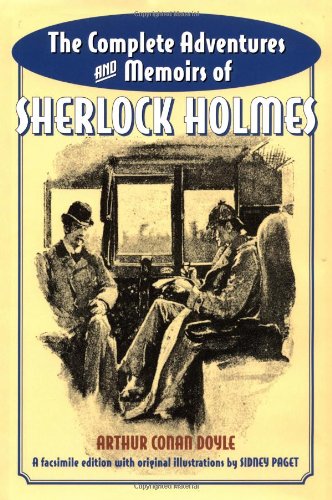
Therefore, with such standout encouragement, I’m not bothered to say that of the 17 books that I’ve read so far in 2023, 16 of them were re-reads. They included the full “canon” of Arthur Conan Doyle’s Sherlock Holmes (the 4 novels and the 5 collections of short stories): A Study in Scarlet, The Sign of Four, The Adventures of Sherlock Holmes, The Memoirs of Sherlock Holmes, The Return of Sherlock Holmes, The Hound of the Baskervilles, The Valley of Fear, His Last Bow, and the The Case Book of Sherlock Holmes.

There were also a couple of terrific adventure novels in that re-read pile (Robert Louis Stevenson’s The Master of Ballantrae and Rafael Sabatini’s Scaramouche); Karel Capek’s insightful play from 1920, R.U.R.; and 4 of Shakespeare’s “history” plays (Henry VI Part One, Henry VI Part Two, Henry VI Part Three, Richard III.)

And the only new work? Well, it was an exceptional one, The Politically Incorrect Guide to Western Civilization by Anthony Esolen. You’ll probably find me posting quotes from Esolen’s book on my Facebook page for some time. Plus, it made me eager to read other books he’s written. He’s relevant, accurate, insightful, wise, spiritually tuned in, and a wonderful writer. 

I recommend the Esolen book as highly as I can. And, yes, all of the others rate several stars as well. 


Wednesday, July 06, 2022

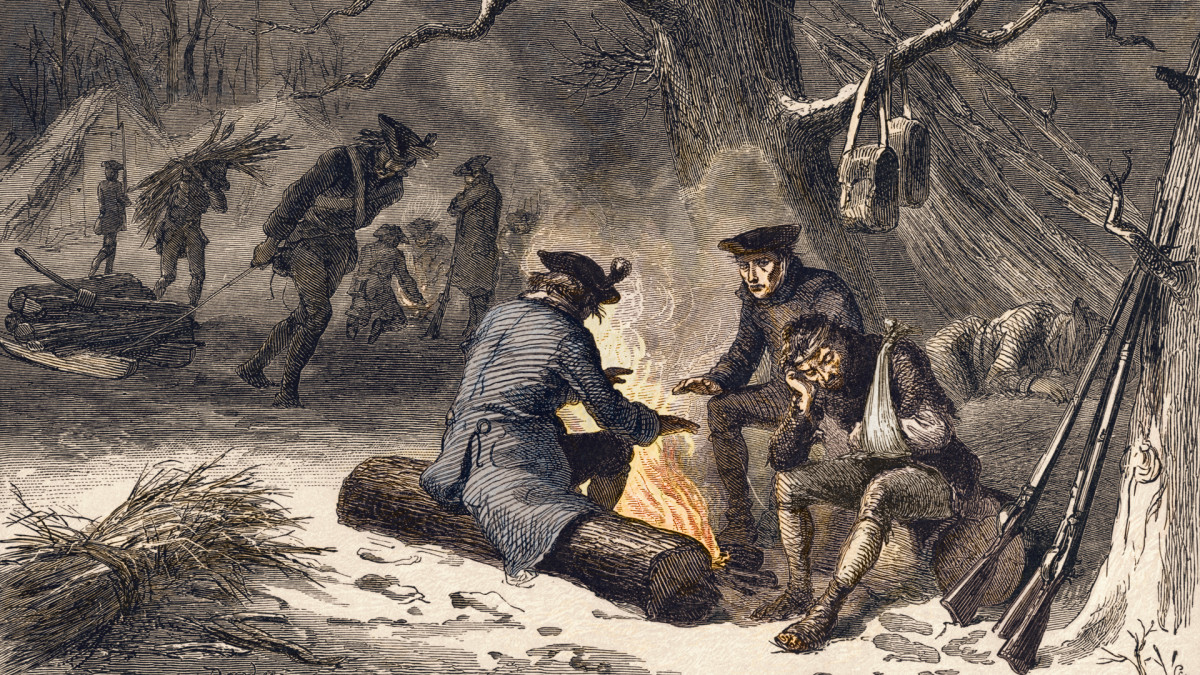
"Like a Set of Beggars" -- Revolutionary War Veterans Disrespected by Congress

My generation remembers (with great shame) how American soldiers returning from brave and sacrificial service to their country in the Vietnam War met with despicably unjust and ungrateful attitudes from liberal politicians and a snobbish minority of the public.

But it wasn’t the first time that such selfish and shallow irresponsibility had been shown to American soldiers. Joseph J. Ellis, writing in The Quartet: Orchestrating the Second American Revolution, 1783-9 (page 60) describes the response of a majority of low-minded politicians to veterans of the Revolutionary War.

“Congress eventually voted to provide full pay for five years for officers in lieu of half pay for life, but doing so was a purely rhetorical exercise, since there was no money in the federal coffers to pay anyone. Even that meaningless commitment generated widespread criticism, especially in New England, where returning officers were greeted with newspaper editorials describing them as blood-beaked vultures feeding at the public trough.

At least in retrospect, the dissolution of the Continental Army in the spring of 1783 was one of the most poignant scenes in American history, as the men had stayed the course and won the war were ushered off without pay, with paper pensions and only grudging recognition of their service. Washington could only weep: “To be disbanded… like a set of beggars, needy, distressed, and without prospect…will drive every man of Honor and Sensibility to the extreme Horrors of Despair.’”

Friday, June 03, 2022

Everything I Needed to Know I Learned from Sherlock Holmes! -- Volume Four (of Four)

Let's see, Volume 4 of this series makes it a “Top Forty” of sage conclusions about life from the greatest of all detectives. 

Perhaps these quotations will take you in a hansom cab back through the fogs of London to the 21B Baker Street digs of Sherlock Holmes and Dr. John Watson where the game is always afoot.

And, for handy reference, here are the previous posts: Volume 1; Volume 2; and Volume 3.

1) “Crime is common. Logic is rare.”

2) “Some people without possessing genius have a remarkable power of stimulating it.”

3) “It is fortunate for this community that I am not a criminal.”

4) “As a rule, the more bizarre a thing is the less mysterious it proves to be.”

5) “Woman's heart and mind are insoluble puzzles to the male.”

6) “We can but try - the motto of the firm.”

7) “Idleness exhausts me completely.”

8) “An Eley's No. 2 [pistol] is an excellent argument with gentlemen who can twist steel pokers into knots.”

9) “There are always some lunatics about.”

10) “These are much deeper waters than I had thought.”

Tuesday, May 31, 2022

Everything I Needed to Know I Learned From Sherlock Holmes! -- Volume Three (of Four)

No, don’t worry. For those Baker Street Irregulars among you who haven’t yet had your fill of the great detective’s “points to ponder,” here are ten more from my catalog of Holmesian profundities. 

(By the way, the first two volumes are, respectively, here and here.)

1) “Mediocrity knows nothing higher than itself; but talent instantly recognizes genius.”

2) “It's a wicked thing to tell fibs.”

3) “Chloroform vapour does not help the palate.”

4) “Nothing clears up a case so much as stating it to another person.”

5) “Life is infinitely stranger than anything which the mind of man could invent.”

6) “When one tries to rise above Nature, one is liable to fall below it.”

7) “To a great mind, nothing is little.”

8) “All knowledge comes useful to the detective.”

9) “If a herd of buffaloes had passed along, there could not be a greater mess.”

10) “What object is served by this circle of misery and violence and fear? It must tend to some end, or else our universe is ruled by chance, which is unthinkable.”

Everything I Needed to Know I Learned from Sherlock Holmes! -- Volume Two (of Four)

Here’s the next installment of this series, being important “words to live by” from the greatest detective of all time.

(Oh yes; here’s Volume 1.)

1) “It is my business to know what other people don't know.”

2) “Work is the best antidote to sorrow.”

3) “Evil indeed is the man who has not one woman to mourn him.”

4) “It is better to learn wisdom late than never to learn it at all.”

5) “You can't play with edged tools forever without cutting those dainty hands.”

6) “Any truth is better than indefinite doubt.”

7) “Jealousy is a strange transformer of characters.”

8) “Dogs don't make mistakes.”

9) “I have investigated many crimes, but I have never yet seen one which was committed by a flying creature.”

10) “Our highest assurance of the goodness of providence seems to me to rest in the flowers. All other things, our powers, our desires, our food, are really necessary for our existence in the first instance. But this rose is an extra. Its smell and its color are an embellishment of life, not a condition of it. It is only goodness which gives extras, and so I say again that we have much to hope from the flowers.”

Monday, May 23, 2022

Everything I Needed to Know I Learned from Sherlock Holmes! -- Volume One (of Four)

During a lifetime of avid reading of Sherlock Holmes, the world’s greatest “private consulting detective,” I have learned many crucial lessons. In the next few days, I'll post here some of the most important. All are direct quotations of the profound Mr. Holmes as recorded, of course, by the ever-dependable Dr. Watson. Some you will find witty, some humorous, but you'll also be surprised at how morally profound some of these quotations are. Enjoy.

1) “When a man embarks upon a crime, he is morally guilty of any other crime which may spring from it.”

2) “A trusty comrade is always of use.”

3) “There is nothing more deceptive than an obvious fact.”

4) “I take a short cut when I can get it.”

5) “I can't make bricks without clay.”

6) “It is a capital mistake to theorize before one has data.”

7) “When a doctor does go wrong, he is the first of criminals.”

8) “Education never ends, Watson. It is a series of lessons, with the greatest for the last.”

9) “A man should keep his little brain attic stocked with all the furniture that he is likely to use, and the rest he can put away in the lumber-room of his library where he can get it if he wants it.”

10) “Your life is not your own. Keep your hands off it...The example of patient suffering is in itself the most precious of all lessons to an impatient world.”


Wednesday, February 16, 2022

In Which "Class" of Readers Are You?

“Readers my be divided into four classes,” believed the English poet Samuel Taylor Coleridge, the famed author of The Rime of the Ancient Mariner.

The first of those classes Coleridge believed were the sponges. They were those, he said, “who absorb all they read and return it nearly in the same state, only a little dirtied.” Ouch! 

The second class consisted of the sand glass (moderns would know them as hourglass) readers. These retained nothing from their time with a book. Indeed, they were content to merely get through the book for the sake of passing the time. 

The third class? They were the strain-bags, like our day’s tea bags, who retained merely the dregs of what they read. 

And, finally, Mr. Coleridge described the fourth class of readers as “mogul diamonds, equally rare and valuable, who profit by what they read and enable others to profit by it also.”

Mogul diamonds; that, of course, is the class to shoot for, becoming a reader that allows quality books to illuminate his own life and then who gratefully passes the glistening shine on to others.

Monday, July 26, 2021

The Trumpets Sound for Mr. Valiant-for-Truth

Here is a stirring passage from John Bunyan's The Pilgrim's Progress. It comes from Part Two of that classic allegory and describes what occurs after Mr. Valiant-for-Truth is summoned to the Celestial Gate by the Master. Mr. Valiant-for-Truth makes his will, as it were, speaks his parting words, and departs for glory.

Then said Mr. Valiant-for-Truth, "I am going to my Father's; and though with great difficulty I am got hither, yet now I do not repent me of all the trouble I have been at to arrive where I am. My sword I give to him that shall succeed me in my pilgrimage, and my courage and skill to him that can get it. My marks and scars I carry with me, to be a witness for me that I have fought His battles who now will be my rewarder."

When the day that he must go hence was come, many accompanied him to the river-side, into which as he went, he said, "Death, where is thy sting?" And as he went down deeper, he said, "Grave, where is thy victory?" So he passed over, and all the trumpets sounded for him on the other side.

Friday, July 16, 2021

“The World Is Getting Socialism Like the Measles"

“The world is getting socialism now like the measles.  It all comes of a defective education.” (Says an old Scots craftsman, Andrew Amos in John Buchan's 1919 thriller, Mr. Standfast). 

Other passages relevant to the effete progressives the novel's hero encounters: 

“It was their fashion never to admire anything that was obviously beautiful, like a sunset or a pretty woman, but to find surprising loveliness in things which I thought hideous.”  

"I hate more than I love.  All we humanitarians and pacifists have hatred as our mainstream.  Odd, isn’t it, for people who preach brotherly love?  But it’s the truth.  We’re full of hate towards everything that doesn’t square in with our ideas, everything that jars on our lady-like nerves...We’ve no cause – only negatives, and that means hatred, and self-torture, and a beastly jaundice of soul.” 

Thursday, March 05, 2020

Being Alone in the Dark

“There need never be a fear of the impersonal, because the personal-infinite God is really there. 

This is not just a piece of theater. If we live in the light of the doctrine that we say we believe, this very basic form of fear dissolves away. This is what the Christian parent says to the little child who is afraid to be left alone when the mother goes out of the room. There is nothing complex about it. It is as simple and profound as God’s existence. The little child is afraid to be left alone in the dark with the impersonal situation, and we may stay there and comfort him, but eventually the Christian parent has to say ‘But you do not have to be afraid, because God is here.’ This is a profound truth, not just for children. Indeed, it is the glory of the Christian faith that the little things are profound and profound things are overwhelmingly simple. 

So when the mother teaches the little child that God is there with him, and as the child grows and comes to know for himself that there are good and sufficient reasons to know that God is there, this has meaning in a profound sense that will prove sufficient all his life -- through all his philosophical wanderings, as well as in the darkness of the night. On the basis of the existence of the biblical God, and who He is in the total structure of the Christian faith, it is not meaningless for the little child in the dark and it is not meaningless for the most diligent student in philosophy who has ever walked through the darkness of philosophical speculation.” (Francis Schaeffer, Chapter 11, True Spirituality)

Tuesday, December 03, 2019

A Christmas Commentary from Harry Reasoner

Harry Reasoner wrote this provocative Christmas commentary in 1962 and shared it on the CBS radio program, Calendar. In 1969 the World War II veteran delivered it to a national audience on 60 Minutes and then again two years later on the ABC Evening News. Reasoner would write late in his broadcasting career that he received more viewer mail about this piece than anything else.

You may not agree with exactly how Reasoner puts everything but you can't help but be amazed (and grateful) that such a piece was once allowed expression on such a program as 60 Minutes. Check it out.

“What Christ Looked Like”

The basis for this tremendous annual burst of gift buying and parties and near hysteria is a quiet event that Christians believe actually happened a long time ago. You can say that in all societies there has always been a midwinter festival and that many of the trappings of our Christmas are almost violently pagan. But you come back to the central fact of the day and quietness of Christmas morning — the birth of God on earth. It leaves you only three ways of accepting Christmas.

One is cynically, as a time to make money or endorse the making of it.

One is graciously, the appropriate attitude for non-Christians, who wish their fellow citizens all the joys to which their beliefs entitle them.

And the third, of course, is reverently. If this is the anniversary of the appearance of the Lord of the universe in the form of a helpless babe, then it is a very important day.

It’s a startling idea, of course. My guess is that the whole story — that a virgin was selected by God to bear His Son as a way of showing His love and concern for man — is not an idea that has been popular with theologians. It’s a somewhat illogical idea, and theologians like logic almost as much as they like God. It’s so revolutionary a thought that it probably could only come from a God that is beyond logic, and beyond theology.

It has a magnificent appeal. Almost nobody has seen God, and almost nobody has any real idea of what He is like. And the truth is that among men the idea of seeing God suddenly and standing in a very bright light is not necessarily a completely comforting and appealing idea.

But everyone has seen babies, and most people like them. If God wanted to be loved as well as feared, He moved correctly here. If He wanted to know His people as well as rule them, He moved correctly here, for a baby growing up learns all about people. If God wanted to be intimately a part of man, He moved correctly, for the experiences of birth and familyhood are our most intimate and precious experiences.

So it goes beyond logic. It is what Bishop Karl Morgan Block used to call a kind of divine insanity. It is either all falsehood or it is the truest thing in the world. It either rises above the tawdriness of what we make of Christmas or it is part of it and completely irrelevant. It’s the story of the great innocence of God the baby — God in the form of man.

And it is such a dramatic shot for the heart, that if it is not true for Christians, nothing else is, because this story reaches Christians universally and with profound emotion. So, if a Christian is touched only once a year, the touching is still worth it, and maybe on some given Christmas, some final quiet morning, the touch will take.

Because the message of Christmas IS the Christmas Story. If it is false, we are doomed. If it is true, as it must be, it makes everything else in the world all right.

Monday, December 02, 2019

"A Morning Prayer for Christmas Day" (Robert Louis Stevenson)


O God, our loving Father, help us
Rightly to remember the birth of Jesus,
That we may share in the song of the
Angels, the gladness of the shepherds
And the worship of the wise men.

Close the door of hate and open the
Door of love all over the world.

Deliver us from evil by the blessing
That Christ brings, and teach us
To be merry with clear hearts.

May the Christmas morning make us happy
To be thy children and the Christmas
Evening bring us to our beds with
Grateful thoughts, forgiving, and
Forgiven, for Jesus' sake. 
Amen.

Thursday, May 09, 2019

On Gifts (Both Earthly & Heavenly)

Here’s few thoughts on gifts, giving, and God from Paul Tournier. They are taken from the final pages of his remarkable little book, The Meaning of Gifts, published first in Zurich in 1961 under the title Geschenke und ihr Sinn.

“Mutuality is the very law of love: There is no pleasure in loving unless the other enjoys equally his being loved. Every man needs to feel that someone is really interested in him, his affection, his life, or even in the smallest gift possible. This need is imperative, far more so than most wish to admit…

And yet, despite this, the concept of a greater happiness to come, mysterious and yet real and complete, stands out beyond all this race after incomplete and partial gifts and indeed gives it meaning. If each gift is a symbol of love, no matter how small the gift, then surely there must be a love, total and supreme, one that doesn’t fail. This is what men intuitively await, and what they are seeking in the smallest gifts received each day…

Sooner or later we realize that all human gifts are relative, limited, and uncertain, even the most beautiful and costly of them. Everything that we receive we can also lose…This persisting need is itself a clear indication that its goal is ever toward a final ending after which we all confusedly aspire: We are looking for an absolutely unchanging love, one that nothing can ever change. The universal quest for gifts is nothing other than a seeking after God, by whatever name we may call him. For only the One Who has made all things and Who owns all things can give them without asking anything in return except our gratitude. 

Thus, there comes a day when a man understands that all is of grace, that the whole world is a gift of God, a completely generous gift since no one forced Him to it.… 

The great gift, the unique and living one, is not a thing but a Person. It is Jesus Christ Himself. In Him God has given Himself, no longer just things which He creates or has created, but His own Person, His own suffering, and His own solitude, given unto death itself…

Thus it is that God offers it freely. He is the One Who has paid its price, in the death of His Son. The erasure of all our failings and all our remorse, of all our regrets and our rebellion, what a gift it is! The redemption of all our joys about to be swallowed up in death, and their fulfillment in eternal joy itself — what a gift indeed!… 

Should then the little gifts of our daily existence lose their importance in the face of such a great and unique gift? Many men have thought so. Once they discovered the riches of divine love and forgiveness, they turned their eyes away from this world in order to contemplate nothing but heaven. But this shows that they had not yet grasped the meaning of the gospel, for the gospel is never a flight from reality. It is, rather, an act of incarnation in this real world. The same divine love created this world that now saves it from disintegration — the love of Jesus Christ.

Such is the biblical point of view, revealing a God of action, One who enters into human history, Who is ceaselessly concerned about our world even in its smallest details, and in every man at every moment of his life. He does not hold anything here below in contempt, for all these are symbolic of the reality above…

Far from turning us away from the world, Christ directs us to it. He awakens within us an altogether new concern for it. Then, just as little children, we can enjoy all the little gifts of this earthly life, seeing in them so many signs of that great and final gift which awaits us.”

Thursday, April 04, 2019

The True Spirit of Socialist Revolution

From the mouths of the socialist revolutionaries described in Alexander Solzhenitsyn’s novel, November 1916 (Chapter 22). And remember, as a freedom fighter, a principled and hardworking historian, and, of course, a longtime resident of the Soviet gulags, Solzhenitsyn knew well what he was talking about.

“Boycott the reactionary professors! Let students, not professors, govern the universities!”

“Every important assassination was greeted with pious approval, gloating smiles, and gleeful whispers. Don’t call it murder! Where there’s a party, an ideological basis, terror is not murder, it is the supreme expression of revolutionary energy. Not an act of revenge, but a summons to action, an affirmation of life! Terrorists are people of the highest moral sensitivity.”

“But in the hospital left-wing doctors treat only revolutionaries and soldiers. Any simple soul who makes the sign of the cross is refused admission.”

“Freedom of speech! Yes — but only for orators of whom the majority approved. Those who were out of tune with the crowd were howled down, pummeled, bundled off the platform.”

“Two bombs were planted in the cafe of the Bristol and anarchist proclamations said it was ’so that we can see the vile bourgeois writhing in their death throes.’”

“Later came the ‘robberies movement’: savings banks, post offices, state liquor shops were plundered wholesale. There were daring raids every day...Instructions to terrorists recommended that bombs should be made of cast iron, so that there would be more splinters, and packed with nails…It was bloody work! Done in a hurry, to quench the bonfires of revolution with blood!”

Wednesday, April 03, 2019

Malcolm Muggeridge's Winter in Moscow is a Rare Treasure...And In More Ways Than One

Winter in Moscow is the remarkably enlightening and controversial novel written by Malcolm Muggeridge was based on his experiences in Russia during 1932 and 1933 while serving as the newspaper correspondent for the left-leaning Manchester Guardian.

Michael D. Aeschliman, in his introduction to the 1987 edition (now, like all other copies, long out of print) describes the book’s origins and impact:

“The belief in an inevitable, collective human progress grew to dominate ‘enlightened’ Western opinion more and more steadily from the time of Bacon in the 17th Century, through the propagandastic and revolutionary writing of the French philosophers and their Jacobin and socialist successors in the 18th and early 19th Centuries, as Hannah Arendt has written, it ‘became an almost universally accepted dogma.’ ‘Glory to Man in the highest!’ wrote the poet A.C. Swinburne expressing the characteristic optimism and the Utopian expectations of his era…”

As a humanist and Fabian socialist Muggeridge shared this naive idealism and, like many intellectuals of his time, looked to the Soviet Union as a key development in this movement of social progress. But his experiences in Russia tore that idealism apart and, rare among his breed, he dared to see through the irrationality, the lies, the extreme cruelty, and the utter hypocrisy of Communism. He came back telling the truth…and was quickly vilified for doing so.

But Aeschliman points out that Muggeridge didn’t just lose a philosophy, he also gained a fervent new belief. He finally believed in something real. “That ‘something’ was the reality of evil...and the willing collaboration with it by legions of adulatory liberal and socialist intellectuals was something that would never cease to astonish and appall him, and would never cease to inspire his pen to some of the sharpest, most powerful moral satire ever written in our language.”

Now I must tell you that Winter in Moscow is a very hard book to get hold of. I discovered one of only a handful of copies that are available through the interlibrary loan program and, when it came it was in really delicate condition. But I treated the book with great care and the content of the book with even greater care, respect, and appreciation. I would suggest that with all the loose talk going around about socialism nowadays, making the effort to find a copy (don’t worry about buying one -- the cheapest copy I could find through the internet was over $100 -- is still well worth the effort.

Sunday, December 16, 2018

The Carol of the Field Mice

This delightful carol was sung by the little field mice outside Mole’s door in Chapter 5 (Dulce Domum, the Christmas chapter) of Kenneth Grahame’s classic, The Wind in the Willows. 

“Carol”

Villagers all, this frosty tide,
Let your doors swing open wide,
Though wind may follow, and snow beside,
Yet draw us in by your fire to bide;
Joy shall be yours in the morning!

Here we stand in the cold and the sleet,
Blowing fingers and stamping feet,
Come from far away you to greet--
You by the fire and we in the street--
Bidding you joy in the morning!

For ere one half of the night was gone,
Sudden a star has led us on,
Raining bliss and benison--
Bliss to-morrow and more anon,
Joy for every morning!

Goodman Joseph toiled through the snow--
Saw the star o'er a stable low;
Mary she might not further go--
Welcome thatch, and litter below!
Joy was hers in the morning!

And then they heard the angels tell
`Who were the first to cry NOWELL?
Animals all, as it befell,
In the stable where they did dwell!
Joy shall be theirs in the morning!'