Comments on literature, the arts, and popular culture from Denny Hartford, Director of Vital Signs Ministries.
Showing posts with label Not My Cup of Tea. Show all posts
Wednesday, November 21, 2018
Uh, What Book on Heaven Are You Talking About, Chip?
As I began to read Chip Ingram’s book, The Real Heaven: What the Bible Actually Says (published in 2016), I was struck by the absence of references to other books on this critical subject. I was surprised (and disappointed) that he didn’t mention any sources that inspired or informed him nor did he suggest any sources for additional reading. Indeed, in his book of 184 pages, there were only 18 footnotes and not a single one referred to a book about heaven.
I found this strange. Where, for instance, were the references and/or recommendations to Randy Alcorn’s penultimate study, Heaven or Joni Eareckson Tada’s book, Heaven, Your Real Home?
This omission was made yet more troubling when, in the first chapter, Ingram describes how his dying father’s attitudes were brilliantly transformed by reading a book on heaven that Ingram himself had given to him. Ingram writes, “I vividly remember coming back to visit my dad in his final days and observing a dramatic change in his outlook. The book helped Dad get a grasp of what Heaven is really going to be like. The truth about Heaven from God’s Word turned Dad’s fear into positive expectation…An unbelievable transformation had taken place. There was no fear and uncertainty. There was no panic or anxiety. There was only confidence and clarity. You see, my dad now had a deep assurance about Heaven. And that brought hope and comfort and made a huge difference in his last days. That experience in many ways was a catalyst for my own journey of discovering what the Bible actually teaches about Heaven.”
Encouraging? You bet. Stimulating? No doubt.
But then, inexplicably, Ingram fails to tell his readers what book he’s talking about!
I couldn’t help but thinking, “Why write your own book on heaven if such an excellent study on the topic, one of which you have profound experience of its salutary effects, already exists? Why would you not — at the very least — let your readers know about this great book so they could have yet another helpful source besides your own?”
Well, I’m now quite a bit further into Chip Ingram’s book and, though there certainly is value in reading it, I don’t find it nearly as informative, inspiring, or confidently joyful as are either Randy’s or Joni’s books on heaven. So, take it from someone who, with immense delight, has read Heaven and Heaven, Your Real Home more than once, I’d go with one (or both) of those to enlighten your mind on this critically important subject.
Thursday, September 20, 2018
Bookin' Along: Off the Shelves
As I frequently mention, most of my reading in the last couple of decades is actually re-reading -- that is, re-reading books whose meaningful moral values, encouraging inspiration, and/or unusual entertainment value I already appreciate. This latest reading review provides a clear example of this for of the last 15 books I’ve read, 12 of them have been re-reads. They include novels, plays, a collection of short stories, and some books specifically dealing with theology and the Christian life. So, since my latest catch-up post appeared here back on July 5, here are the latest.
The novels? Well, two of them were the July and August selections of our book club, The Notting Hill Napoleons. They were, respectively, Killer Angels, Michael Shaara’s fine story of the battle of Gettysburg, and Fire Over England, A.E.W. Mason’s adventure novel set in Queen Elizabeth’s England. Both were re-reads and I found both were informative, entertaining, and inspiring books...again.
Two more in the novel category were the chivalric works of Arther Conan Doyle, The White Company and Sir Nigel. They were okay but this time around I found them both a little tedious at times.
The other four novels in these last couple of months were all re-reads also: the three in the Dickson McCunn series by John Buchan (Huntingtower, The House of the Four Winds, and Castle Gay) and the other was Dashiell Hammett’s classic The Maltese Falcon. And though I like Buchan quite a lot, the only one of this group that I'd recommend highly would be The Maltese Falcon, a true classic of the hardboiled detective genre.
The short story collection I mentioned was The Legend of Sleepy Hollow and Other Stories by Washington Irving. They were a mixed bag. The title story is superb as was “Rip Van Winkle” and “The Devil and Tom Walker” but most of the others were uninteresting.
The plays? Dr. Faustus by Christopher Marlowe has been a favorite since high school even though it wasn’t until I became a Christian that I really got the message. Cyrano de Bergerac by Edmund Rostand is another favorite and it too has profound moral lessons. Finally, I also re-read Alexander Solzhenitsyn’s The Love-Girl and the Innocent, a a very moving play set in one of the Soviet gulags. I recommend all three.
The books read in the past couple of months that dealt most pointedly with spiritual matters were a Bible study by John MacArthur (The Elements of True Prayer), a 1971 practical theology work by J. Dwight Pentecost (Design for Discipleship) and Peter Kreeft’s Jesus-Shock. These were all provocative and helpful but, to be honest, I would recommend many other Christian books before I got down to these.
Okay, that’s it until the next catch-up post. Keep reading!
Monday, April 20, 2015
Hits and Misses
Among my recent reading (ever eclectic in nature), there have been some standout hits...and some definite misses too.
First, the hits.
* Fire Over England (A.E.W. Mason)
This adventurous and well-written novel, originally published in 1936, is set in Queen Elizabeth’s England just before the campaign of the Spanish Armada. It's a striking story of heroism that makes for very enjoyable reading.
* Hitler's Master of the Dark Arts (Bill Yenne)
Though sometimes flawed by amateurish writing, Yenne compiled a great deal of thorough and relevant research for this history of the Nazi's deep involvement in cultic paganism, their irrational hatred of Christianity, and their zeal to rid the world of Jews and Slavs. He especially trains his focus on the weird "witch doctor" of the Nazi Party, Heinrich Himmler. It is not easy reading, of course, but it illuminates a very dark part of the 20th Century and, though I've read a lot about the origins of World War II, the philosophy of the Nazis, and the horrors of the holocaust, the book presented a lot of new information.
* Moondrop to Gascony by Anne-Marie Walters. (Here's a review posted earlier.)
* Why Men Hate Going to Church (David Murrow)
A 5 star book, this was easily one of the most insightful and provocative non-fiction books that I've read in some time. Having long a critic of the feminization of the Church in the West, I found most of Murrow's points spot on. In addition, the book has fueled a lot of thinking, praying, and discussion. I recommend it highly.
Now, the misses.
* Jesus On Leadership (C. Gene Wilkes)
At the L'Abri Conference in Rochester last February, I talked with an academic who teaches leadership courses at the graduate level. I confessed to her that I had heard a lot about the topic -- let's face it, leadership books and seminars have been the rage for a couple of decades -- but I had never been too interested in looking into the matter. She suggested a few titles and I promised to delve into at least one of them. I chose this one because it had a foreword written by our old friend, the late Calvin Miller. However, I found the book poorly organized and remarkably repetitive. The thesis of the book (and it takes 245 pages to say it over and again) is that Jesus's leadership was servant-oriented. No kidding.
* The Enchanted Castle (E. Nesbit)
Not all children's novels classified as classic deserve the description. This 1907 novel, though quite famous and beloved by many, is one of those that doesn't make the grade.
* On the Beach (Nevil Shute) (Here's a review posted earlier.)
Wednesday, April 15, 2015
On The Beach Is "Out to Sea"
A bestseller in
its time, On the Beach was written by Nevil Shute, the author of several books we have liked quite a bit over the years. We haven't been the only ones either. Shute's novels have been voted onto the Notting Hill Napoleons booklist many times.
However, this end of the world novel was something quite different. For unlike the books we have enjoyed (Pied Piper, Ruined City, and A Town Called Alice), novels which were interesting, well-written, and containing uplifting themes and characters, Claire and I thought On the Beach a dull and depressing read. Shute wanted the novel to be a warning to the Western world about the proliferation of atomic bombs (it was 1957, who didn't?) but he was so pretentious and unimaginative that he produced less a novel than simply a longwinded tract.
The plot is unrealistic and surprisingly predictable. The characters are generally unlikeable. And the tone of the novel is desperately hopeless. There is, for instance, no hint of transcendence -- except the possibility of reincarnation (a belief that Shute plays with in a couple of his other works). Finally, On the Beach works hard to put a positive spin on suicide and euthanasia. Why wait for a painful, undignified death from radiation poisoning when you can take a pill whenever you decide you've had enough?
Now in the interest of fairness, I should mention that our evaluation of the novel was substantially more negative than the other members of our book club. In fact, most of them actually liked the book. But for Claire and I, slogging through On the Beach was neither enjoyable or productive.
Thursday, September 04, 2014
Titus Andronicus: A Bloody Mistake
Without a doubt, the worst play attributed to William Shakespeare was the bloody tragedy, “Titus Andronicus.” I’m going through my own Shakespeare re-reading festival this summer and autumn and I felt obliged to go through this horrid tale again, the first time since my undergraduate days. (Back in the late 30s, weren’t they?)
Anyhow, I pass along my recommendation to read Shakespeare’s gems but, under no circumstances, should you bother yourself with this nightmare of torture, rape, mutilation, murder, cannibalism, and two of the most loathsome villains (Aaron and Tamora) in literature. Oh, did I mention that the thing is poorly written too?
By the way, and let’s keep this between you and me (and Coleridge and Eliot, who agree with me), I don’t think Shakespeare even wrote the thing.
One other note. This play has not been well-received throughout much of its history. Ravenscroft thought it an “indigested heap of rubbish” in the 17th Century. Johnson despised it in the 18th Century. And the Victorians rightly condemned it as stupid and ridiculously violent. It has only been in the post-modern decadence emerging from the 1950s that “Titus Andronicus” has found its praises.
And the statement that makes about modern culture may be the greatest tragedy of all.
Friday, December 12, 2008
On Condescending Writers
Among my pet peeves are arrogant authors. I came across one today whose elitist attitudes were on dramatic display -- a very strong condescending manner towards the rubes he satirized and a style that was less prose than it was never-ending inside jokes. (“No, I don’t understand the reference but it must be because this author is so clever and in the know.”)
The only reason I picked up this particular book was because of a recommendation by a good friend. I brought it along with me today as I had volunteered to baby-sit another friend’s art exhibit that’s running all month in a new Council Bluffs café/gallery. I had some work to do but figured I’d finish with it long before my 5-hour shift was over. Naturally then I tossed a couple of extra books into my shoulder bag to ward off any boredom that might assail me.
For the sake of my friend, I tried to read the book. Really I did. But the author’s smug pleasure with himself for using foreign phrases, sophisticated sexual references, and just being so much more hip than the hayseeds he was making fun of finally did me in.
I had reached page 33.
How pleased I was, therefore, to break from the novel by enjoying one of those deli sandwiches offered by the cute but multi-punctured kids across the way. And even more pleased I was when I remembered that other book in my bag to fall back on, John MacArthur’s 1989 God With Us: The Miracle of Christmas.
Whew. That was close, for the only thing worse than getting stuck somewhere without a book is getting stuck somewhere with a bad book!
So be careful and do with books like what you do with can openers, batteries and tires -- always have a spare in case of emergency.
Tuesday, December 09, 2008
On “Reworking” Bible Characters
I finally got around to reading Thomas Costain’s The Silver Chalice but I only made it 130 pages or so before I gave it up. Costain’s writing skills were sharp enough and the story was interesting but I require higher standards regarding plot and perspective when an author drags biblical characters onto his own pages. The Silver Chalice just didn‘t make it.For instance, Costain seemed to have an affection for the Bible but a seriously limited respect for its credibility. I had noticed his revisionism a few times earlier in the novel but when St. Luke explained away the exorcisms of demons as Jesus merely easing the “madness” that made the afflicted believe they had demons, I had enough.
I looked at the 400 pages or so that were left in the novel and then I noted the table where several other books awaited my attention and…it was a pretty easy choice.
Wednesday, May 14, 2008
Over 16 Years of Books: The Notting Hill Napoleons' Reading List to Date
A couple of weeks ago I posted the Notting Hill Napoleon's reading schedule for 2008. And I promised that I would soon give you the entire list from our sixteen plus years of reading and discussing classic (and, of course, on occasion a few not-so-classic) novels.I've taken the liberty of putting asterisks in front of the titles of Claire's and my favorites. I'm sure that the other members (currently Quint & Carol, John & Barb, Chet, Bill & Karin, Karla, and Ruth -- others over the years have included Tom & Jane, Robert, and Jo) would place their marks in different places.
In the same vein, I've put a simple dash (signifying a minus sign) in front of the ones I've considered clunkers! And if there's a question mark in front of the title, it's because I was either out of the country or for some other reason didn't read that month's book. And, quite probably, there's a few I've put question marks in front of that I did read but just don't remember at all.
1992
* 1) A Man Called Thursday by G. K. Chesterton
2) Inferno by Durante degli Alighieri (aka Dante)
3) 1984 by George Orwell
4) The Great Divorce by C.S. Lewis
* 5) One Day in the Life of Ivan Denisovich by Alexander Solzhenitsyn
- 6) The Tragedy of Pudd'nhead Wilson by Samuel Clemens (aka Mark Twain)
* 7) Bleak House by Charles Dickens
- 8) The Power and the Glory by Graham Greene
9) Christmas Stories by George MacDonald and The Fourth Wiseman by Henry Van Dyke
1993
1) Crime and Punishment by Fyodor Dostoevsky
- 2) Shadows in the Grass by Karen Blixen (aka Isak Dinesen)
3) The Robe by Lloyd C. Douglas
4) The Power by James Mills
5) The Merchant of Venice by Edward de Vere (aka William Shakespeare)
* 6) The Napoleon of Notting Hill by G.K.Chesterton
7) That Hideous Strength by C.S. Lewis
* 8) Our Town by Thornton Wilder
* 9) First Circle by Alexander Solzhenitsyn
* 10) A Tale of Two Cities by Charles Dickens
1994
1) Journey to the Center of the Earth by Jules Verne
2) Red Badge of Courage by Stephen Crane
* 3) Les Miserables by Victor Hugo
4) One of Ours by Willa Cather
5) Love’s Labour’s Lost by Edward de Vere (aka William Shakespeare)
* 6) The Man in the Iron Mask by Alexander Dumas
7) Four Faultless Felons by G.K. Chesterton
* 8) Cancer Ward by Alexander Solzhenitsyn
? 9) The Fall of the House of Usher by Edgar Allan Poe
? 10) Billy Budd by Herman Melville
* 11) Great Expectations by Charles Dickens
1995
* 1) The Brothers Karamazov by Fyodor Dostoevsky
2) Club of Queer Trades by G.K. Chesterton
? 3) The Source by James Michener
4) O Pioneers! by Willa Cather
* 5) Henry V by Edward de Vere (aka William Shakespeare)
* 6) Ivanhoe by Sir Walter Scott
7) The Hunchback of Notre Dame by Victor Hugo
8) Fahrenheit 451 by Ray Bradbury
* 9) David Copperfield by Charles Dickens
1996
- 1) The Spectator Bird by Wallace Stegner
* 2) War and Peace by Leo Tolstoy
* 3) Frankenstein by Mary Shelley
* 4) The Children of Men by P. D. James
* 5) The Book of the Dun Cow by Walter Wangerin
* 6) Taming of the Shrew by Edward de Vere (aka William Shakespeare)
* 7) Lorna Doone by R. D. Blackmore
* 8) The Ball and the Cross by G.K. Chesterton
- 9) Wise Blood by Flannery O'Connor
* 10) Men at Arms by Evelyn Waugh
- 11) Till We Have Faces by C.S. Lewis
* 12) Pickwick Papers by Charles Dickens
1997
* 1) Dr. Zhivago by Boris Pasternak
2) Spring Came on Forever by Bess Streeter Aldrich
? 3) Quo Vadis by Henryk Sienkiewicz
4) The Paradoxes of Mr. Pond by G.K. Chesterton
5) Cry the Beloved Country by Alan Paton
* 6) Julius Caesar by Edward de Vere (aka William Shakespeare)
7) The Deerslayer by James Fenimore Cooper
* 8) Old Mortality by Sir Walter Scott
9) Pride and Prejudice by Jane Austen
10) Dr. Jekyll and Mr. Hyde by Robert Louis Stevenson
* 11) The Old Curiosity Shop by Charles Dickens
1998
* 1) The Fellowship of the Ring by J.R.R. Tolkien
2) The Idiot by Fyodor Dostoevsky
3) Death Comes to the Archbishop by Willa Cather
4) How Green Was My Valley by Richard Llewellyn
5) The Last of the Mohicans by James Fenimore Cooper
6) A Midsummer Night's Dream by Edward de Vere (aka William Shakespeare)
* 7) Rob Roy by Sir Walter Scott
8) The Vicar of Wakefield by Oliver Goldsmith
* 9) The Count of Monte Cristo by Alexander Dumas
10) The House of the Seven Gables by Nathaniel Hawthorne
* 11) Oliver Twist by Charles Dickens
12) Snow by Calvin Miller
1999
1) Vanity Fair by William Makepeace Thackeray
* 2) Robinson Crusoe by Daniel Defoe
3) Wuthering Heights by Emily Bronte
* 4) Watership Down by Richard Adams
5) The Scarlet Pimpernel by Baroness de Orczy
* 6) Macbeth by Edward de Vere (aka William Shakespeare)
* 7) The Three Musketeers by Alexander Dumas
* 8) August 1914 by Alexander Solzhenitsyn
* 9) Waverley by Sir Walter Scott
* 10) Nicholas Nickleby by Charles Dickens
* 11) A Man for All Seasons by Robert Bolt
2000
* 1) Anna Karenina by Leo Tolstoy
2) Kidnapped by Robert Louis Stevenson
3) The Woman in White by Wilkie Collins
4) My Antonia by Willa Cather
5) The Jungle by Upton Sinclair
6) Romeo and Juliet by Edward de Vere (aka William Shakespeare)
* 7) Quentin Durward by Sir Walter Scott
* 8) Don Quixote by Miguel de Cervantes
9) The Picture of Dorian Gray by Oscar Wilde
* 10) Our Mutual Friend by Charles Dickens
- 11) Lilith by George MacDonald
2001
1) Resurrection by Leo Tolstoy
* 2) The Neverending Story by Michael Ende
* 3) Kenilworth by Sir Walter Scott
* 4) Uncle Tom's Cabin by Harriet Beecher Stowe
- 5) Giants in the Earth by Ole Edvart Rolvaag
* 6) Hamlet by Edward de Vere (aka William Shakespeare)
7) The Fountainhead by Ayn Rand
* 8) The Napoleon of Notting Hill by G.K. Chesterton (our first re-read)
9) All Quiet on the Western Front by Erich Maria Remarque
- 10) The Good Earth by Pearl Buck
* 11) Sir Nigel by Sir Arthur Conan Doyle
* 12) Martin Chuzzlewit by Charles Dickens
2002
* 1) The Two Towers by J.R.R. Tolkien
* 2) The White Company by Sir Arthur Conan Doyle
3) Moby Dick by Herman Melville
? 4) The Chosen by Chaim Potok
5) Officers and Gentlemen by Evelyn Waugh
6) The Tempest by Edward de Vere (aka William Shakespeare)
7) Captains Courageous by Rudyard Kipling
* 8) The Flying Inn by G.K. Chesterton
* 9) Animal Farm by George Orwell
10) The Master of Ballantrae by Robert Louis Stevenson
* 11) Dombey and Son by Charles Dickens
- 12) Skipping Christmas by John Grisham
2003
1) Tess of the D'Urbervilles by Thomas Hardy
2) Fathers and Sons by Ivan Turgenev
3) Magnificent Obsession by Lloyd C. Douglas
4) The End of the Battle by Evelyn Waugh
* 5) Wind in the Willows by Kenneth Grahame
* 6) Othello by Edward de Vere (aka William Shakespeare)
7) Gods and Generals by Jeff Shaara
* 8) The Bride of Lammermoor by Sir Walter Scott
? 9) The Once and Future King by T.H. White
* 10) Little Dorrit by Charles Dickens
* 11) Manalive by G.K. Chesterton
2004
1) The Human Comedy by William Saroyan
2) Advise and Consent by Allen Drury
* 3) Cyrano De Bergerac by Edmond Rostand
4) The Desert of Wheat by Zane Grey
5) The Maltese Falcon by Dashiell Hammett
* 6) Scaramouche by Rafael Sabatini
7) Tom Sawyer by Samuel Clemens (aka Mark Twain)
8) The Wreath (First part of Kristin Lavransdatter) by Sigrid Undset
9) Southern Mail by Antoine de Saint-Exupery
* 10) Hard Times by Charles Dickens
11) True Grit by Charles Portis
2005
1) Master and Commander by Patrick O'Brian
2) Black No More by George S. Schuyler
3) Brave New World by Aldous Huxley
* 4) The Phantom of the Opera by Gaston Leroux
* 5) Northanger Abbey by Jane Austen
* 6) Guy Mannering by Sir Walter Scott
7) Huckleberry Finn by Samuel Clemens (aka Mark Twain)
* 8) Captain Blood by Rafael Sabatini
* 9) Murder in the Cathedral by T.S. Eliot
10) Moonstone by Wilkie Collins
* 11) Barnaby Rudge by Charles Dickens
2006
1) The Tenant of Wildfell Hall by Anne Bronte
2) Rodney Stone by Sir Arthur Conan Doyle
* 3) Pied Piper by Nevil Shute
* 4) Ben Hur by Lew Wallace
? 5) The Kite Runner by Khaled Hosseini
* 6) The Antiquary by Sir Walter Scott
* 7) The Hounds of God by Rafael Sabatini
? 8) North and South by Elizabeth Gaskell
9) The Warden by Anthony Trollope
* 10) Shadows on the Rock by Willa Cather
* 11) The Mystery of Edwin Drood by Charles Dickens
* 12) A Redbird Christmas by Fannie Flagg
2007
* 1) The Betrothed by Alessandro Manzoni
- 2) Peace Like a River by Leif Enger
3) Barchester Towers by Anthony Trollope
* 4) A Town Like Alice by Nevil Shute
5) Jane Eyre by Charlotte Bronte
6) The Song of Roland edited by Dorothy Sayers
* 7) Witch Wood by John Buchan
* 8) Bellarion the Fortunate by Rafael Sabatini
? 9) Jayber Crow by Wendell Berry
10) Tales of the Long Bow by G.K. Chesterton
* 11) Bleak House by Charles Dickens
12) The Good Shepherd by Gunnar Gunnarsson
Rather Thin Soup
I was concerned that my frustration with Ravi Zacharias’ The Grand Weaver: How God Shapes Us Through the Events of Our Lives, was going to put a bit of a downer on our evening’s discussion of the book. I need not have worried. The seven others involved all had pretty much the same reaction. We found it too anecdotal, too arbitrary and generally unconvincing in its stated purpose. Once we realized we had all experienced the same kinds of disappointment, we were free to go ahead and enjoy the discussion, including those elements of the book which we did, in fact, find interesting and helpful.For instance, among the things we liked were some of his stories. They certainly made you believe that Zacharias would be an interesting, stimulating fellow to spend an evening with. However, we agreed that even his best stories often seemed to drop down into the text without a lot of real sympathy to the context. I often found myself wondering – “Well, an interesting story, but what’s his point? How does it prove or even effectively illustrate his argument?”
Surprisingly, only one of us had ever read a Zacharias book before. And, between the 7 of us, that involves about 220 years worth of reading Christian literature. But we did know his reputation as a skilled and highly principled apologist. And, ironically, I'm sure that it was that very reputation that set us up for our disappointment with The Grand Weaver. We were looking for progressive, persuasive argument, something more akin to Norm Geisler (his frequent colleague) or to Schaeffer, Lewis, or Chesterton. Yes, there certainly were glimpses of that tradition in The Grand Weaver, but only glimpses. The lack of organization, poor or no transitions, a weaker biblical support for specific points than what we expected --- it just wasn’t a book that any one of us could recommend to others.
Again, I will reiterate that there were parts of the book that we appreciated. Several of his stories, as I mentioned, are memorable and useful. His quotes of Muggeridge and Chesterton; his comments about the intriguing John Howard; his retelling of an Arnold Fine story; his chapters on calling and worship (my favorite parts of the book, hands down) – all these we appreciated.
But we wanted more. We expected more.
One in our party that night expressed her belief that Ravi Zacharias’ reputation was so well-established by so many people we respect that we probably shouldn’t take The Grand Weaver as a typical example of his work. In fact, his solid reputation combined with some of those sparkles that did shine through in the book, were persuading her to give the guy another chance. A couple of us agreed and so we will probably tackle another of his books sometime. But The Grand Weaver? I'm afraid none of us were willing to give it anything but the most limited of endorsements.
Tuesday, May 06, 2008
The Shootist: A Hit and a Miss
One of our favorite Western films is The Shootist, with John Wayne in his last (and one of his most compelling) movie roles. It also starred Lauren Bacall, Jimmy Stewart and Ron Howard with small but wonderful parts played by Richard Boone, Hugh O'Brian, Scatman Crothers, Harry Morgan, John Carradine, Sheree North and Rick Lenz. Therefore, we thought we might also enjoy the Glendon Swarthout novel on which the film was based.Uh...we didn't.
Wednesday, March 21, 2007
A Troubled Peace
Leif Enger’s novel, Peace Like A River, has received a huge amount of acclaim from both professional reviewers and common readers. So it certainly doesn’t need any more from my modest little book blog.And that’s good because…
…I didn’t care for it.
Sure, Mr. Enger is a clever fellow and the novel has its points, most of which were covered at the Notting Hill Napoleons’ discussion of the book a few weeks ago. But the group was divided in their reaction to the novel (nothing new there) with some liking it a lot while others believed it to be one of the weaker offerings we’ve had in a while.
Now, I’m not generally fond of modern art, whether it comes in a frame, a DVD cover, or between the pages of a book, so I’ll candidly admit that Peace Like A River (published in 2001) faced an uphill climb in winning me over. But, I sincerely tried to dispassionately, patiently give the book every chance to succeed. Scout's honor.
However, there was yet a second issue that increased the risk that I wouldn't care for the novel; namely, its focus on religious characters. I certainly do not require the books I read to deal with spiritual matters but when religion is presented, I most definitely want it to be real. And, from the very beginning, Peace Like a River failed this test for me.
For starters, having the protagonist being whisked by a tornado into the third heaven and alighting unhurt several miles away was hardly the way to alleviate my suspicions of the novel’s attitude towards religion. But when followed by air walking, a soup pot that never gets empty, a whole posse of Highway Patrol cops being blinded and unable to perform their legitimate functions, and then a heaven/limbo scene whose heterodoxy was especially unnerving, whatever residue of goodwill and longsuffering I had was all used up.
Do miracles happen in the real world? Of course they do. But the miracles in Peace Like A River strain even a believer’s credibility (this believer anyhow) way beyond the breaking point and not because of the specific action of the miracle alone but because of their purposes. For example, a miracle which covers for acts of vandalism, intereference with police, and aiding the flight of an convicted murderer doesn't seem to be the kind which heaven normally distributes
There were other things in this novel that kept me from liking it. Among them was a little girl who spoke, thought and wrote at a level way beyond any prodigy I’ve ever head of; the unnecessary murder of a FBI agent who, if we are to believe the author’s idea, has never heard of proper police protocol; a villain who has no transportation, let alone a GPS system, but yet manages to track his victims (several states away) in mere days; and a miracle worker who loses that power when he falls in love.
But, far worse than everything else, was an outright awful farmyard scene where the bad guy opens fire and mortally wounds a young boy. Well, I suppose I shouldn’t say “mortally” since there’s that weird Elysian fields moment on the next page where a substitute victim is offered up and an exchange of organs is made, allowing the boy to return to earth better than ever.
Too much by half. Indeed, this conclusion turned what had only been a mildly unsatisfactory read up till that time into something that was much more disheartening and distasteful. And, did I mention, the bad guy (a sexual deviant and cold-hearted killer) gets away?
Leif Enger undoubtedly had some well-written moments in this novel and I was not averse to joining my fellow Napoleons in pointing them out at our discussion that night. But those points could not make up for the book's implausibility of plot, the oddball characters, the eccentric religious views, and that terribly vexatious ending. I give Peace Like A River the nix.
Tuesday, August 29, 2006
Read Any Good Books Lately?
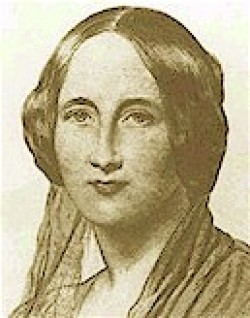
I'm afraid I've been kinda' stacked up when it comes to book discussions in recent days. In fact, I’ve had three of these meetings in two weeks and, because of a rather hectic schedule, I have had the rare misfortune of missing one of them altogether. That discussion was over Elizabeth Gaskell’s North and South, August's book selection of our longstanding (and outstanding too!) monthly literary club, the Notting Hill Napoleons.North and South is a Victorian novel of manners but with a serious reform-minded perspective, not too surprising from a woman whose professional start came via Charles Dickens. But alas, hardly having gotten into the novel, I cannot give any personal comment on it. And, as is my custom on those unusual occasions where I have not read the book, I disqualified myself from attending last Saturday night’s discussion. Oh yeah; I know that many members of book clubs in America do not consider actually reading the selected book necessary for attendance. But still, my own scruples will not allow me to attend empty-headed…well, any more than usual anyhow.
(An aside here --Scruples is an interesting word, mysterious even, for it derives from the Latin word scrupulus -- a small stone. Cicero is the first we know to use it in a way relating to conscience, many say suggesting the discomfort of a pebble in a shoe. But I'm more inclined to think he used it to emphasize a minor pressure on one's conscience as opposed to a weightier, more serious feeling of guilt. After all, we still speak of "something weighing on my conscience" or "I felt as if a huge weight was lifted from me" and so on. But scrupulus is a diminutive word, meaning a smaller version of the normal word for a sharp stone, scrupus. I think Cicero deliberately used the diminutive in order to describe that niggling pang of conscience that one can "shrug off" rather than the deeper guilt which leads to sorrow and repentance.)
Anyway, back to my theme...
I don't know if I missed much in not reading Elizabeth Gaskell. From what Claire told me, the consensus of the Napoleons was that it was but a modest success. However, I did miss very much the fellowship of the evening. These guys are all dear friends and partners in Christian ministry.
But on a more successful note... The couple of weeks preceding the literary club meeting did bring two terrific books and subsequent discussions my way. One was the pleasure of discussing G.K. Chesterton’s novel of 1904 (his first) which was The Napoleon of Notting Hill. Yes, that's the source for the name of our book club and, as yet, it stands as the only book in our 13-year history that we have re-read as one of our monthly choices. This time around though, The Napoleon of Notting Hill was the selection for our bi-monthly meeting of the Omaha Chesterton Society. The second book was The Pilgrim’s Regress by C.S. Lewis, the next in line of Vital Signs Ministries' ongoing Book It! project.
Regarding our Chesterton group, it was a bit smaller than usual but a great time was still had by all, including Sr. Rita, who laughingly testified that our selection was the only Chesterton book that turned her off. “I didn’t like it at the beginning; I didn’t like it at the end; and I didn’t like it in the middle!” So, take that, Gilbert!
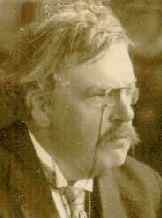
There’s definitely some reason behind Sr. Rita's negative reaction because Chesterton’s early novels, especially this one and The Man Who Was Thursday, do create problems even for his most enthusiastic fans. For in those days, Chesterton was still a young man and inexperienced as a writer of fiction. The immaturity of his understanding of Christianity also comes into play. It shouldn't be surprising then that it takes some time for him to really hit his stride.Still, we’re talking about Chesterton, one of the most insightful, exuberant and talented wordsmiths of the 20th Century and so even his early works are treasures in their own right. Not fully developed, but still witty and colorful adventures which bring forth many profound ideas and always uniquely phrased. Thus, the others gathered that evening could sympathize a bit with Sr. Rita's good-natured dismissal of The Napoleon of Notting Hill, but they still found more than enough in the novel to make it an enjoyable and even inspirational experience.
The primary subjects explored in The Napoleon of Notting Hill are courage, chivalry, patriotism and idealism. It is a fantasy novel, an exaggerated martial adventure which sees the boroughs of London pitted in deadly warfare against each other. It contains humor and high farce yet, like Chesterton does in all genres, he uses this wild, futuristic novel to make very serious points about the English practices of his own day, including British imperialism. Indeed, The Napoleon of Notting Hill served as a strong influence on such revolutionaries as Michael Collins and Mohandas Ghandi. Another point -- the emphasis on local patriotism in the novel sheds light on GK’s love of Europe’s chivalrous sentiments of the past, sentiments which would later be used even in shaping his economic philosophy of Distributism.
So, risking a knock on the head from Sr. Rita, I must say that The Napoleon of Notting Hill gives the reader some wildly unique characters, an ingenious and adventurous plot, and that masterful use of the English language at which GK Chesterton is paramount. And it gives even more than that. Read it...and like several of us have...read it again and again.
The second book read and discussed in the last couple of weeks was also one of the earliest works of its author, C.S. Lewis’ The Pilgrim’s Regress: An Allegorical Apology for Christianity, Reason and Romanticism. This isn’t an easy book to read (like most carefully constructed literature, none of Lewis' are) but it is certainly worthwhile for all believers. And yes, for skeptics too. It is an especially valuable read for anyone interested in Christian apologetics (of a unique sort) for Lewis’ fiction, of course, isn’t really fiction at all – it is preaching, but using a distinctive approach that Lewis pulls off better than anyone.
The Pilgrim’s Regress is part autobiography, part allegory (using John Bunyan as a rough precursor), part apologetics and part artistic exploration. And while the arguments within can be a little obtuse for those without the basics of philosophy, they are still quite illuminating to all. Like all great books, it teaches you an awful lot -- including teaching you what you don't know so you are motivated to go make up for those deficiencies!
A second problem in The Pilgrim's Regress can come from an under-appreciation of Lewis’ remarkable insights into the human need for romance. But in most versions of the book you'll find available today, there is included a preface written by Lewis 10 years after the book’s first publication. In that preface, he gives an expanded definition of just what he means by "romance." That is very helpful.
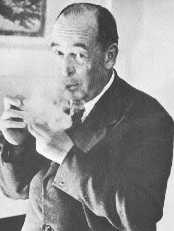
So, even if you’re a novice at philosophy and even if you do not completely track with Lewis’ fascination with the “intense longing” of the soul, you may find the book (as did all of those present for the discussion: Walt, Mary, Chet, Matt, Sandy, Quint and the Hartfords) of remarkable interest and power. I'll go so far as saying that you may find The Pilgrim’s Regress one of Lewis’ most outstanding works. It is easily one of the most appealing, honest, and insightful books ever written about “the process" of conversion.
I have read C.S. Lewis pretty consistently since my own conversion to Christianity 36 years ago. But this was my first time reading The Pilgrim’s Regress. It will not be the last. I found it every bit as captivating and wise as my heretofore favorites: Mere Christianity, The Abolition of Man and Screwtape Letters...and, oh yes, Miracles.
So, there you have it -- I missed out on the Elizabeth Gaskell discussion (my bad) but I’m so pleased I managed to get in on the other two – GK Chesterton’s The Napoleon of Notting Hill and C.S. Lewis’ The Pilgrim’s Regress.
Good books and good friends to share them with – this only is a taste of heaven.
By the way, if you're looking for nice paperback copies of The Napoleon of Notting Hill, The Man Who Was Thursday, or many other Chesterton books, why not order them from the American Chesterton Society? Scroll down this page a little ways and you'll find what you need.
Tuesday, April 18, 2006
"Robin Hood: An English Legend, Retold"
Among the books I've been reading the last month or so, there have been both jewels and coal. My guess is that's a pretty typical situation, especially for eclectic readers like myself who pop from genre to genre and subject to subject. Furthermore, I have probably been worse than the norm in reading coal (aka clunkers, chaff, middling to lousy books) because throughout my life I've grabbed so many strange selections from off library shelves and used book stores -- spur of the moment choices, without any background of the work or author, ever hopeful of the thrill of discovering a hidden treasure. And then I always have felt a nagging sense of obligation that, once started, even dull, plodding, unenjoyable books must be read to their end.Ugh. Bad habits. But I'm greatly relieved to say that I have improved my record in this matter over the last several years. I don't frequent either libraries or used book stores as much as I once did and age has tended to decrease the scope of my interests -- when one is more aware of the limitations of time, one's priorities are somewhat sharpened. But the greatest reason I've cut down on reading clunkers is that a major chunk of my reading nowadays is, in fact, re-reading. And whereas I may be silly enough to read a clunker once, I'm not so silly as to read it twice.
Well, there was one lump of coal in my recent pleasure reading that was especially disappointing. That was because its hero has been a favorite of mine since childhood but the book was boring and slow as second molasses to get through. It was The Adventures of Robin Hood: An English Legend, Retold, written in 1902 by Paul Creswick. My edition (a sale item off a book table) was published by Reader's Digest in 1991. Unfortunately, it was not condensed in any way.
Creswick's book takes immense liberties with many of the Robin Hood legends. And that's particularly bad if the re-telling is less adventurous, less memorable than the original. The various characters in the legend were changed too much. There was an inordinate amount of time spent on Robin's younger years. And my desire to travel again the mysterious paths of Sherwood Forest, participating vicariously in Robin's gallant combats with the Sheriff of Nottingham never came close to satisfaction.
Creswick was an extremely popular author of children's books in England but his reputation has nearly dropped from sight. His only books still around are one about King Arthur's knights and this one about Robin Hood. But high his star once was, even so high as to win the partnership for the Robin Hood book of N.C. Wyeth as his illustrator. Wyeth had been a protégé of the most prominent illustrator of his day, Howard Pyle, but he had gone on to become a
highly acclaimed artist in his own right. And busy? It is estimated that in his 40-year career, Wyeth produced over 4,000 paintings, murals and illustrations. Wyeth died in 1945 but his popularity continues even now. In fact, stores and websites that sell posters still feature N.C. Wyeth as one of their standard artists.By the way, if you'd like to compare my reaction to yours, you can sample (or read in full) the Creswick text on the web. The Wyeth illustrations are there too, a few of which decorate this entry.
Thursday, January 26, 2006
Two Mystery Novels: One to Read and One to Leave Alone
Kingsley Amis (photo right) is said to be one of the best of all English wordsmiths and I have little enough experience in his work to agree or disagree. After reading through The King’s English a few years back (Amis' handbook of sorts on English words and usage), I would have given him the benefit of the doubt. However, after finishing his small mystery novel, Crime of the Century, I would probably lean towards the disagreement pole. Sorry.Perhaps the little crime novel doesn’t show Amis at his best. Perhaps the fellow shines much more brightly in his novels, poetry, journalist columns, even his try at writing a James Bond novel (Colonel Sun) --all of which I’ve never read. I’m sure that must be it because Crime of the Century is a quite confusing and uneven affair, written with a slapdash attitude toward detail, continuity and character development that often dipped below amateurish.

Of course, I do applaud Amis for his respect of the “Golden Age” of English mystery writing which he clearly was trying to emulate in Crime of the Century. In fact, I applaud that sentiment so heartily that last evening I enjoyed reading one of the authentic gems from that "Golden Age" -- John Dickson Carr's Gideon Fell novel, Dark of the Moon. Now that was a mystery worth reading! Carr (shown at left) also wrote under the name Carter Dickson and I've read many of his great mysteries under both names. Look for him in your local used bookstore.
Tuesday, November 08, 2005
Rumpole Reviewed
Oliver Twist's mentor once gave him this well-founded piece of advice, "...There are books of which the backs and covers are by far the best parts.” How true.
And alas, even the discriminate book lover who tries to select only the best reading finds himself burdened by a clunker now and then. That's one of the reasons The Book Den exists: to try and help our visitors find the good ones and avoid the bad.
In the latter case, let me suggest that my first excursion into John Mortimer's Rumpole series will be my last. The feisty, fat curmudgeon I had caught a couple of times in the British television series based on Mortimer's stories seemed interesting so I had long included them in my "gotta' read sometime" list. I can now cross that particular entry off and get to other things.
Why? The stories in the collection entitled, Rumpole and the Angel of Death, have their fair share of witticisms and wry observations about the declining power of the English court system to establish justice. Good enough. But the stories seemed too simple in plot and, more importantly, were much too amoral in tone.
For instance, Rumpole as a defense attorney has one goal -- keeping his client from being convicted. Whether or not justice is served by the truly guilty party paying for his crimes is not his concern. Even in my "entertainment" reading, I want the good guy to win and the bad guy to lose; at least, I desire that the reader clearly knows who the good guys and bad guys are.
Furthermore, in the title story of this collection, Mortimer uses the Rumpole story as a vehicle to not only present a pro-life nurse in a decidely negative light but even to make a soft argument for euthanasia. That was enough for me. There are too many other well-written, interesting, and morally-sound stories yet to be read for me to bother any more with Mr. Rumpole.
But, as Mr. Brownlow might comment, "The cover was pleasant."
Saturday, July 30, 2005
3 Misses and a Hit
I'm afraid that Vital Signs Ministries’ activities have kept me from doing a whole lot of reading in this last month. Three weddings, plenty of lawn care work and even a brief trip to St. Louis also played their part. Therefore, I’m just now getting back to a normal pattern.
There have been a few books I have managed to slip in here and there. They've included:
* The 1951 John D. MacDonald novel called Murder for the Bride. I liked JDM's Travis McGee novels when I first read them back in the 1980's but he is inconsistent in the books where he tries to get away from his Ft. Lauderdale "salvage expert." This book predates his creation of McGee and, while it has some hints that made his future books into bestsellers, it was overall disappointing. Don’t bother about this one.
* My first entry into the Edgar Rice Burroughs’ world of Tarzan (Tarzan and the Jewels of Opar), came via a 25¢ copy from a used book table in St. Paul, Minnesota. It wasn't worth it. No kidding, I really disliked this book. The Darwinian/ Nietzschean philosophy was nearly overwhelming while the extravagance of the jungle king’s talents, strengthens, instincts, etc., went way beyond the comical.
* A novel I did find entertaining in my recent reading was Ann Radcliffe’s The Mysteries of Udolpho written in 1794. It was one of the earliest and most popular examples of what became known as Gothic horror stories. It was an entertaining read but much too long and uneven to be a novel I'd recommend to others. Also, the amount of fainting, swooning and collapsing women was pretty annoying after awhile!
My motivation for reading Udolpho came from Jane Austen’s Northanger Abbey (a Notting Hill Napoleon’s selection from a couple of month’s back that I really enjoyed). Austen had obviously relished The Mysteries of Udolpho and I wanted to see what her excitement was all about. Okay, now I know.
* Finally, one more "pleasure book" from the last few weeks (this time not a novel) was one I found delightful, even inspirational. It was Treasure In a Cornfield by Greg Hawley. Written in the mid-90's, it is the story of an incredible family adventure – the reclamation of goods from the Missouri River steamboat Arabia sunk in 1856. It was an exciting real-life story of American history, buried treasure, and inventive and persistent researchers. Very fun.
Tuesday, February 15, 2005
The "Emperor's New Clothes Syndrome:" Thoughts on the Passing of Arthur Miller
Terry Teachout, in today's Wall Street Journal, goes out on a limb by daring to criticize the work of the recently deceased Arthur Miller, an American playwright highly-esteemed by the powers that be. I liked the piece and recommend it. (You can read it by clicking on the title of the post.) Teachout's article also prompts me this morning to mention a cultural condition I find increasingly bothersome.
Let's call it the "Emperor's New Clothes Syndrome"-- the fact that scores of writers, actors, musicians, painters, etc. who are hailed by the Old Guard are, in fact, quite poor in personal talent or the intellectual content of their craft...frequently both. Such artists are hailed more because they adhere to the same notions of political correctness as do their professional critics than because their accomplishments actually deserve praise. At the same time, other artists who do have important things to say and say them very well are dismissed or ignored altogether.
But very few (Teachout's essay is an exception) want to point out the obvious. Very few risk criticizing the plain nakedness of those icons held up for our adulation by the Old Guard for fear of being (or, at least, being called) ignorant, square or...gasp...even religious! Thus, even Christians accept whatever judgments are handed down by the amoral and devoutly secular pundits of academia and media (like Rex Reed, the Hollywood Academies, and Ms. Murgatroyd-Howell of American Lit. 101) instead of letting biblical values and a wider experience of quality art enlighten us.
Subscribe to:
Posts (Atom)


